negative etiketine sahip kayıtlar gösteriliyor. Tüm kayıtları göster

6 Ekim 2016 Perşembe

Ebola nurse Pauline Cafferkey tests negative for virus

Pauline Cafferkey has tested negative for the Ebola virus, NHS authorities have said, after she was rushed to hospital for a fourth time since her return from Sierra Leone in 2014.


The 40-year-old nurse underwent further tests under the care of the infectious diseases team at Queen Elizabeth University hospital, Glasgow, where she was taken under police escort on Thursday morning.


A spokesperson for the hospital said: “Following a detailed assessment we can provide reassurance that there is no risk to the public.”


Police Scotland confirmed that they had provided an escort “as a matter of course” for the ambulance taking Cafferkey from her home in South Lanarkshire at 9.30am.


Nicola Sturgeon (@NicolaSturgeon)

Sending my very best wishes to Pauline Cafferkey. She has already suffered way too much – & all for trying to help others. Thoughts with her


October 6, 2016


Cafferkey, 40, first became ill from the Ebola virus on her return from Sierra Leone in late December 2014. She flew on from Heathrow to her home in Glasgow, where she was admitted to hospital with a fever later confirmed as Ebola infection. She was flown to London’s Royal Free hospital, which has a specialist isolation unit for Ebola patients.


She nearly died, but when she was pronounced out of danger in January 2015, it was thought the virus had been cleared from her system. That October, however, she became critically ill again and was readmitted to the Royal Free. Her case astonished experts, as the first in which the virus had lurked in her brain or spinal cord undetected and then attacked again, causing near-fatal meningitis.


She has had long-term problems as a result of the second attack, including muscle weakness in one leg, which has meant she is unable to run as she used to do.


Nurse Pauline Cafferkey relieved to be cleared of misconduct over Ebola virus – video

A third admission to the Royal Free turned out to be a false alarm, but the experts have no idea whether the Ebola virus is still lying undetected in her body because too little is known about the virus and the disease.


Three weeks ago, Cafferkey was cleared by her regulatory body, the Nursing and Midwifery Council, which had investigated allegations that she concealed her high temperature at Heathrow on her return from Sierra Leone.


The NMC, which could have struck her off the nursing register, said Cafferkey’s judgment had been compromised by her developing illness, and so she could not be held responsible for putting the public in danger. Cafferkey said she reported her high temperature, but was allowed to fly on to Glasgow.


Ebola nurse Pauline Cafferkey tests negative for virus

19 Eylül 2016 Pazartesi

How Negative Emotions Affect Your Health – Stay Positive!

Every bad emotion in the human body can cause a variety of disorders of organs and many types of diseases. Of men thinking, fear, tension, worry, all that remains deeply etched in the human mind and body, which is usually the initiator of many diseases.


Between emotion the body there is a strong connection. This is confirmed by the Chinese psychology, which is a part of traditional Chinese medicine. There are five organ systems, belonging to certain types of emotions.


No matter how much a man thought to have some little things negligible, they will be for years to settle somewhere in the bodies and manifest in the form of some tough better. Therefore, it is necessary to time more seriously their emotions and as much as possible to help ourselves to the weight of the situation as soon overcome.


Feelings That Influence Health


Crowding – is one of the emotions that have large effects on the human organism. It defines as a result of excessive concern for certain reasons. Teskoba most affects the intestines and lungs. Crowding will take away a man large portion of energy he has, and thus can lead to shortness of breath, as well as inflammation in the intestines and ulcers.


Joy – This is a nice feeling, most would have thought so, but generally too creates a sense of satisfaction that directly affects the heart. Joy can be very much to excite a man and caused much excitement can be felt some negative vibrations that cause insomnia, fever, and anxiety, as well as very strong palpitations. So no matter how much joy was beautiful and with her man should be cautious.


Sadness – is also a feeling that a lot of influence on the psyche and human health. Sadness besides suggesting tears to my eyes, it negatively affects the work of the lungs and is detrimental to the circulation. Many respiratory diseases and damaged lungs just cause a feeling of sadness. Sadness has a profound effect on the human psyche, causing depression.


Fear – The feeling that every man felt at some point in their lives. This feeling can damage kidney function, as evidenced by the fact that when there is a huge fear can lead to the uncontrolled release of urine. A person experiencing extreme fear can be a great deal with the shock of the kidneys. The kidneys of fear knots in seconds and then comes to a halt in cleaning and filtering blood. Then disrupt circulation in the body and therefore often during fear the hands and feet are a cold man.


Anger – Insults, criticism, criticism, anger, anxiety, all this is what provokes anger in a man. Gall bladder and liver will suffer the most in a person who is angry for certain reasons. Also, anger is a feeling that can affect various biological processes to the man cause a big headache and lack of energy. Anger also can cause the human body to dizziness and high blood pressure.


Shock – a feeling that certainly has a negative impact on the human organization, when his overall health is concerned. When something happens unexpectedly sudden appearance of shock and panic, which will greatly influence the hearts of men, as well as kidney function, especially when it comes to longer shock.


Ambition – This feeling often borders on greed. People who are too ambitious, and therefore the successful and wealthy tend to have problems with heart disease and diseases of the small intestine. Every day thinking about higher goals and increasing their wealth leads to arrhythmia and irregular heartbeat. You do not have to live in fear and thinking about how to increase wealth, but little left to the charms of what we have already gained to the body is relaxed and therefore any healthier.


Nervousness – is something with which most people encounter every day. Nowadays it very difficult to avoid. Science has shown that people who are prone to frequent attacks of anxiety and anger often have liver problems. Also, excessive anger and anxiety affect kidney function and lungs.


I do not care – the feeling that directly affects human digestion, spleen, stomach, and pancreas. When a person worries too much for any reason she can appear painful cramps. Digestive organs are in constant spasm in people more worried and therefore can not perform their normal functions. Then processed food in the intestines comes undercooked food and then it becomes a very suitable substrate for pathogenic organisms and their wastes directly poison the human body.


How to Stay Positive


To the man freed of bad emotions and stress the need to start working on it. To begin with more physical activity and avoiding people who create tension enough to help. Experts say that a man is a much better feeling when your emotions are expressed, and does not keep to himself. If a person believes that currently experiencing a deep pain, it is necessary to divide it with someone, confide in a friend or seek the help of a psychiatrist.


Yoga is an excellent method if a person decides to remain positive in a sea of problems today. It pays special attention to breathing and razlličitim breathing techniques that really positive plug on human health.


Forgiveness is also a great way to release negative emotions in men. When anger and rage present forgiveness will do good in itself, but at this point, it is necessary to think of yourself. The natural person does not have to be sorry after the title of a friend, but that forgiveness serves to liberate man and felt better.


Physical activity will help a person stay positive. Whether it’s about running in the park, hitting the bag or another exercise is one of the best ways to release stress in men. In the example of aerobic exercise releases endorphins and is just, for this reason, it is necessary, and this exercise is often practiced in order to feel better and better mood. The saying “Healthy body, healthy mind”, is completely justified, because of the link between mental and physical condition unbreakable.


A walk in the fresh air very well will impact the many negative feelings that people carry inside. Ten minutes to half an hour walks a day several times will positively affect the overall health of a person, because in this way calms nerves, breathing fresh air and relax tense muscles already. Also, in addition, to being a beautiful feeling, walking is a great impact on maintaining lean lines and the blood vessels.


Positive in the human body will bring safe and vitamin C, vitamin E, magnesium, vitamin B and folic acid.


Read More About Natural Remedies at  Healthy Food Leader


Latest From My Blog


Did You Know About These Powerful Alternative Medications For Anxiety


The Most Effective Anti-Depression Natural Remedies


Discrimination And Weight: The Social Effects Of Obesity


How Negative Emotions Affect Your Health – Stay Positive!

6 Ağustos 2014 Çarşamba

Whole Foods Faces Down Its "Negative Narrative"

In an energy to enhance visitors and battle its “Whole Paycheck” picture, Whole Food items final week announced plans to launch its very first-ever nationwide advertising campaign.


The campaign will highlight that Complete Food items is “the foremost retailer of fresh, wholesome normal and natural foods, giving the highest good quality requirements and an unparalleled purchasing experience.” It will tout transparency about products, including its 5-Stage Animal Welfare ratings in meat, Eco-Scale ratings for cleaning goods, sustainability ratings in seafood, and GMO labeling. This fall, a Responsibly Grown rating system arrives for generate and flowers.


But the overriding message will be highlighting, in the company’s words, “both our value and our values” that management implied isn’t being heard.


In an online discussion earlier this week, the RetailWire BrainTrust deemed the implications of Whole Foods’ upcoming ad campaign. Many of the retailing specialists on the panel indicated that the firm would be wise not to target on aggressive pricing to remedy latest downturns.


Whole Foods, Brooklyn, NY - Photo: RetailWire

Whole Foods, Brooklyn, NY – Photo: RetailWire


“Whole Meals has an image of wonderful top quality and natural merchandise at a fairly large value,” stated Camille Schuster, PhD., president of Global Collaborations. “Competitors, specifically Walmart, are striving to compete with quality organic products at reduced rates. Advertising minimal rates is not going to work for Entire Foods.”


Ed Rosenbaum of Rainmaker Solutions agreed.


“They might be much better off performing what they are very good at and letting the other canines in the fight battle it out above price,” mentioned Mr. Rosenbaum. “No a single can be all things to all people. [Total Food items should] cater to the buyer base they already have in area.”


In truth, Total Foods’ increased charges may be a offering level for their recent customer base.


“Whole Food items is my wife’s go-to market place,” wrote professor and independent consultant Gene Detroyer. “I asked her what she would think if Whole Foods commenced featuring value in their marketing. She quickly responded, ‘I think they would begin cutting corners.’


“She outlets there because she believes in what Complete Foods stands for. She believes she pays far more since she will get better high quality and — this is important — better trust.”


But with Whole Food items missing on same-shop sales in the 2nd quarter this 12 months, and obtaining lowered its outlook for the fourth consecutive quarter, traders want action. If a nationwide brand campaign is to work, BrainTrust members level to other important differentiators apart from value as regions on which to target.


“They want to alter the comparisons to steer shoppers to look at the well being-value of foods,” mentioned Larry Negrich, vice president of advertising and marketing at nGage Labs. “Admit that greater meals and groceries that are greater for the consumer expense a minor far more. Would you spend a tiny much more for very good health for your family?”


“I consider the message is to talk about the fantastic experience Total Food items offers, along with their 365 natural line,” said Tony Orlando, proprietor of Tony O’s Supermarket &amp Catering, “and remind the people what a excellent area it is to uncover amazing food items, freshly-prepared, that can not be identified anyplace else.”


Some BrainTrust members, nonetheless, saw items in a different way. Dr. Stephen Needel of Sophisticated Simulations indicated that there have been a lot more offers to be discovered at Total Food items than one particular might assume.


“We find a good deal of stuff at Complete Food items that is reasonably priced (not just their 365 line, which we like a whole lot),” explained Dr. Needel. “Why not a ‘great foods does not have to be expensive’ pitch? Pushing the high quality of their products is preaching to the choir — even non-consumers possibly feel they have great things.”


Whole Foods Faces Down Its "Negative Narrative"

10 Temmuz 2014 Perşembe

This mother who left her little one on the subway is not some Negative Black Mom. She"s component of a mental-health stigma | Kirsten West Savali

When twenty-12 months-outdated Frankea Dabbs abandoned her 10-month-outdated child lady on a New York City subway platform on 7 July, it was a piercing cry for assist that has lengthy echoed all through homes, neighborhoods and cities across the United States – a cry that is typically ignored or replaced with a far more racially charged narrative.


The surface response to her actions would seem to be one particular of blanket shock: “Why would she do such a horrible issue?”


But the subtext to that query is this: “Why do they do such horrible things?”


And “they” are black girls living in poverty in the United States.


Dabbs, who was reportedly traumatized by witnessing her daughter’s father murdered as she hid beneath a bed even though two months pregnant, is suffering with psychological sickness and is homeless, in accordance to family members members. (She was reportedly also arrested for prostitution, but was never ever convicted.)


“Things is wrong with Frankea’s thoughts,” her aunt informed the New York Day-to-day News. “She walks about with dark shades. She even sleeps in dark shades. I actually feel there is one thing mentally wrong with Frankea.”


But when “incorrect” is a label attached to a younger, black mother who abandoned her child, it displays a broader, a lot more sinister background. “Incorrect” represents a manifestation of black pathology. “Wrong” describes a supposedly innate criminality. “Incorrect” gets the purpose we more invisibilize poor, black females with no a single or nothing at all to rely on but their faith and their family, neither of which is assured.


Dabbs, who was kicked out of her home for allegedly displaying signs of psychological illness, is a textbook case of a female who wants aid, not self-righteous indignation. But, alternatively, her encounter has been splashed across the information as a Negative Black Mom.


By comparison, in a Duke University study carried out by Jayne Huckerby entitled “Girls Who Destroy Their Youngsters”, the author noted that white, middle-class females accused of filicide are often perceived as “mad” mothers who must be taken care of with care and humanity. Due to entrenched racial and ethnic stereotypes, however, females of color living in poverty are perceived as “undesirable” mothers just before they even commit a crime – and some thing worse if they do.


In spite of getting much more most likely to be basically perceived as “negative” mothers, African-Americans are 20% more very likely to report obtaining critical psychological distress than non-Hispanic whites, according to the US Division of Overall health and Human Providers Workplace of Minority Solutions. And, according the NIH study “African American Women’s Beliefs About Psychological Illness, Stigma, and Preferred Coping Behaviors”, just becoming a black woman in the United States areas a single at danger for building psychological illness:


The prices of mental overall health problems are greater than typical for Black girls because of psychological elements that result straight from their knowledge as Black Americans. These experiences incorporate racism, cultural alienation, and violence and sexual exploitation.


The girls believed going through family-related tension and social stress were attainable triggers of psychological sickness. The household-relevant stressors, like trauma, family difficulties, and violence, are supported in the investigation literature. Davis, Ressler, Schwartz, Stephens, &amp Bradley (2008) found that African Americans in minimal-earnings, urban communities are at substantial threat for exposure to traumatic occasions, including possessing relatives murdered and their personal encounter with bodily and sexual assaults, all of which are linked with the onset of publish-traumatic anxiety syndrome and depression.


The stigma connected to psychological well being in this nation is endangering lives. And the stigma of currently being a poor, black lady in this nation with mental wellness difficulties is endangering even a lot more. Black American females struggling at the intersection of race, gender and class face intensely exclusive problems by feeling obliged to embody the quite stereotypes that hurt us, including that of the “sturdy black lady”, even when we are sick. We aren’t supposed to cry when we’re hurt we are not supposed to bleed when daily life throws blow following blow, threatening our quite existence. We are supposed to keep a robust façade so as not to threaten a social ecosystem dependent on our unacknowledged labor to thrive.


There are far more Frankea Dabbs residing at the margins than we see on the information. We want to support them by addressing the disparities in psychological wellness accessibility for females of color residing in poverty, including producing psychological well being dialogues focused on postpartum depression more inclusive of girls of color.


We require to make sure that reproductive well being training and family preparing providers are obtainable to females of color residing in poverty, rather than demonizing them for what they do not know or cannot use when our politicians feel that abstinence-only schooling and limiting birth manage access wins them elections.


We must fix the embarrassing lack of foods protection for ladies of colour living in poverty, rather than permitting those who consider to entry fundamental social services to be derided as “welfare queens.”


Frankea Dabbs may have never informed anyone that she was struggling, preferring as an alternative to hide in the dark – potentially from herself. But she spoke loud and clear when she left her child on an subway platform hoping that an individual – any person –could be the mother or father that she couldn’t. In result, she’s gotten her want: she’s facing costs and, undoubtedly, her child will be removed from her custody. Nonetheless, if we allow her story – and the sensational headlines it created – fade from our collective memory with no altering something about the techniques that failed her and her youngster, we’re just paving the way for it to come about once more.


If these factors are to be achieved, this nation must very first stop denying ladies of color residing in poverty their humanity.


This mother who left her little one on the subway is not some Negative Black Mom. She"s component of a mental-health stigma | Kirsten West Savali

6 Temmuz 2014 Pazar

Merck Makes use of Legal Threats To Stifle Negative Suggestions About Zetia And Vytorin In Italy

In response to repeated legal threats, a public health physician in Italy has withdrawn tips to curtail use of a controversial drug. The drug, ezetimibe, is a important ingredient in Zetia and Vytorin, which is produced by Merck Merck. The cholesterol-reducing drug has been the subject of fierce controversy due to the fact it has never ever been shown to improve clinical outcomes. Regardless of the controversy, in 2013 the medicines had mixed revenue of a lot more than $ two.six billion.


MSD Italy, the Italian arm of the company, sent two “cease and desist” letters to Alberto Donzelli, who is “the head of education, appropriateness, and evidence based mostly medication at the public health authority of Milan (Milan Healthcare),” according to The  BMJ, which published a information report of the affair. The letter was also sent to Milan Healthcare’s director standard and to Roberto Carlo Rossi, the president of the physicians’ regulatory organization in Milan.


As reported in The BMJ, right after the very first letter Rossi replied that the medical commission had concluded “that there was no purpose to object on ethical grounds to Donzelli’s behaviour. Donzelli also replied to every single level raised in the letter. ‘I exercised my right to inform the general practitioners what emerged from our in-depth analyses of the published literature, on a peer to peer basis.’”


In a second letter MSD Italy “reaffirmed its intention to go to court except if Donzelli stopped his ‘seriously damaging action, [that was] tarnishing the company’s and the drug’s picture and status.’” MSD’s medical director, Patrizia Nardini, advised The BMJ: “We are in favour of balanced info, and we decided to write individuals letters simply because we didn’t see a willingness to assess all the data in a balanced way.”


Last month Donzelli capitulated and removed the contentious material from his internet site “until the problem is more clarified within the scientific neighborhood,” The BMJ reports.


In a published statement, quoted by The BMJ, the editors of 5 Italian publications expressed assistance for Donzelli: “In the educational and informational process, the disagreement should be expressed on the pages of scientific journals as a debate between peers, such as the readers who will be ready to determine freely what is the most proper option for individuals.”


Donzelli is hardly alone in criticizing the continued use of ezetimibe in spite of the absence of evidence for clinical benefit. Just recently, ACP Internist, an inner medicine website, raised the query: “Why are we even now prescribing what appears to be a ineffective drug?” The continued use of ezetimibe in clinical practice was also the topic of a information feature in JAMA.


Merck Makes use of Legal Threats To Stifle Negative Suggestions About Zetia And Vytorin In Italy

19 Mayıs 2014 Pazartesi

"Negative" healthcare research can be bad for your wellness

This is really widespread in my speciality of mental overall health. Only just lately, I had a patient with several, complex and severe psychological wellness difficulties who I’d been seeing routinely above the previous yr. She has been secure for a lengthy time, but a couple of months ago, I observed a modify. She had turn out to be paranoid, anxious and depressed. She wouldn’t leave the home and was convinced that her husband needed to destroy her. I was at a loss to make clear the deterioration.


1 weekend, I re-study her health-related notes and noticed that this relapse had happened before, every single few many years. At our following appointment, I located out why. She advised me she had stopped taking her antidepressants and that she’d ceased taking them prior to turning out to be unwell on all the previous events, too. When I asked why, she said she had abandoned her medicine soon after studying a report about the feasible side-effects, which had anxious her.


Many of my other sufferers have carried out the same. Now, whenever antidepressants are in the information simply because of negative study, I know I can count on my clinics to fill up with individuals who have stopped taking their capsules and grow to be acutely unwell as a consequence.


On 1 hand, this response is flawlessly understandable – if I saw alarming headlines every single day about a drug I took, I’d get concerned, also. But as I pointed out to my patient the other week, study suggesting a hyperlink is different to undoubtedly proving a website link. Aside from, therapeutic intervention is all about a delicate weighing-up of likely dangers towards identified benefits. It’s a bitter irony that research into the side-effects of medicines can have its personal side-results, too.


——-


NHS execs need to pay for their commutes like every person else


For people at the leading of the NHS tree, life is excellent. Following a series of Freedom of Details requests by this newspaper, the extent of the largesse enjoyed by senior executives has been exposed.


It’s like the final days of the Roman Empire in excess of at NHS England, the physique set up by ministers to minimize down on bureaucracy. No hint of austerity there, or concern about the greatest use of public money.


A lot of of the executives take pleasure in salaries a lot more reminiscent of cellphone numbers than public-sector wages, as well as generous bills for travel, accommodation and dining out.


Final 12 months, the nine board members claimed almost £200,000 in expenditures in between them (that is the equivalent of 10 junior nurses). This included travel fees to and from NHS England’s offices in London and Leeds.


How is it deemed acceptable for the taxpayer to fund the commute amongst function and home for these hugely paid executives?


Everywhere else in the NHS, nurses, occupational therapists, receptionists, cleaners – the people who hold it running – fund their own commute or, in some circumstances, shell out for parking at the hospital exactly where they work. In the true globe, getting oneself to and from function is part and parcel of possessing a task. Why shouldn’t NHS executives fork out like everyone else?


——-


Emma Watson attended a gala dinner in aid of the Royal Marsden


Will stars come out for unsexy causes, as well?


It was fascinating to see so several of the excellent and the great come out for Prince William’s gala dinner at Windsor Castle in help of the Royal Marsden last week. The likes of Kate Moss, Emma Watson and Benedict Cumberbatch have been there, raising funds for the cancer hospital.


The Royal Marsden is 1 of individuals hospitals, like Fantastic Ormond Street, that is known internationally for its pioneering treatments, and is actually one of the jewels in the crown of the NHS. Men and women are only as well eager to support it. For the celebrities, what could be greater than a bit of self-promotion even though aligning your self to a great trigger, and, in this case, with the Duke of Cambridge, too?


But as I looked at photos of the stars, I couldn’t help believe of NHS establishments rather much more in need to have of help than an A-list hospital. How about a gala dinner for a psychological health unit I know that is struggling financially? One thing tells me a great deal of those celebrities might locate they had a prior engagement that night.


Max Pemberton’s most recent guide, ‘The Doctor Will See You Now’, is published by Hodder. To order a copy, get in touch with Telegraph Books on 0844 871 1515


"Negative" healthcare research can be bad for your wellness

27 Nisan 2014 Pazar

Henning Mankell: A negative night just before my cancer test final results

I slept badly throughout the night of 23 March. I was concerned about what was in shop the subsequent day. The following morning, I had x-rays and blood exams at the Sahlgrenska Hospital in Gothenburg. At about 11 o’clock I had an appointment with Dr Bengt Bergman at the lung clinic. It was the third time I had met him. I was to be informed regardless of whether or not the intense chemotherapy I had undergone had been effective. I shall return to that shortly.


I had begun to regard him as “my” physician. Needless to say, I had attended clinics with other medical doctors, but they all maintained that cancer treatment was conducted by a team that included nurses, well being care assistants and doctors. And that is correct, of course. The treatment and diagnosis of cancer is incredibly complicated. Each patient’s situations are distinctive. Nonetheless, it was critical for me to meet the same physician when it was time for an evaluation of how the chemotherapy had progressed. One of the recurrent crucial remarks about the Swedish wellness support is that individuals are continuously meeting different medical doctors. I can recognize this criticism. New medical doctors indicate that a patient has to begin once again from square a single in conducting a dialogue with an unknown person. I had no need to have to do that with Bergman. By the time of our third meeting we had been on the very same wavelength. He knew how I imagined and expressed myself, and I knew how he stated what he had to say.


We met in his office following he had assessed the exams and x-rays I had been subjected to earlier that morning. I had now undergone half the fundamental chemotherapy. Obviously, my fear the preceding night had been concern that the treatment method had proved to be ineffective – what would come about following in that situation?


Bergman chose his phrases very carefully. He desired to be precise. Not to say also much, nor too little. But the x-rays had been clear: the tumour in my left lung had stopped developing, at least for the minute, and may possibly even have diminished somewhat in dimension. The indications that there was cancerous harm in components of my lymphatic glands had disappeared.


So the chemotherapy had been successful. There was no reason not to proceed with the therapy.


Bergman passed a deemed judgment: “We can regard this as a breathing room,” he mentioned.


I understood quickly what he meant. The situation was positive, but we necessary to steer clear of counting chickens just before they have been hatched. I was still critically sick. Quite seriously ill. But the chemotherapy had succeeded in halting the progress of the aggressive cancerous cells.


Naturally, when I left the hospital I felt relieved. A breathing space was surely not to be sneezed at.


That very same evening my wife, Eva, advised me about something she had heard on the radio. A medical doctor had been speaking about the artwork of health-related treatment method. “Nobody talks about ‘the art of health-related treatment’ presently,” she said. “But that’s what it all boils down to, even so.”


She is proper, of course. When you have lived for virtually 70 many years, as I have, you have really a wide expertise of medical doctors met in excess of the years. Physicians in different scenarios, in different nations. I do not believe I have ever come across an absolute dud, someone I have run a mile to get away from. Clearly, some have been far more capable than others some have been impatient or preoccupied other people have seemed to have unlimited time available.


But the medical doctors I remember most plainly are people who have displayed what can be described, undoubtedly by me, as the innermost subtleties of the art of healthcare therapy. Alleviation, consolation, maybe even cure, often includes a dialogue in which the patient and medical doctor learn how to talk to one particular an additional, and if possible generate a continuity. Medication and other remedies are never ever adequate in themselves. If the patient doesn’t recognize what the medical doctor is saying, or if the doctor is unwilling or unable to interpret the inquiries and worries of the patient, the dialogue that is at the very heart of health care treatment method will never ever materialise.


Bengt Bergman chooses his words carefully. That is the essence of confidence based on reality, and not on illusion.


Now, as I compose this, virtually 3 weeks have passed because that restless evening on 23 March. Tomorrow I shall start the fourth and last session of chemotherapy in this first phase of remedy. I really feel in pretty great form, regardless of the reality that for a although my blood test levels have been such that I necessary a transfusion. But one particular of the main motives why I felt in excellent form was that I truly feel secure and secure in the care of Bergman and his team.


Is there anything more crucial for a cancer patient than a conviction that 1 is being informed the reality and can believe the phrases that a single hears?


I genuinely don’t know what that would be.


• Translated from the Swedish by Laurie Thompson


Henning Mankell: A negative night just before my cancer test final results

21 Nisan 2014 Pazartesi

Researchers uncover strategy to dealing with negative memories

“Often we dwell on how sad, embarrassed, or harm we felt throughout an occasion, and that tends to make us really feel worse and worse. This is what takes place in clinical depression-ruminating on the unfavorable elements of a memory,” Dolcos mentioned.


“But we found that as an alternative of considering about your feelings for the duration of a adverse memory, seeking away from the worst emotions and pondering about the context, like a buddy who was there, what the weather was like, or anything else non-emotional that was element of the memory, will rather effortlessly consider your thoughts away from the unwanted emotions related with that memory.


“Once you immerse yourself in other particulars, your thoughts will wander to anything else entirely, and you won’t be centered on the negative emotions as significantly.”


The technique is a extremely promising substitute to other coping mechanisms this kind of as suppression or reappraisal.


“Suppression is bottling up your emotions, attempting to place them away in a box. This is a technique that can be successful in the quick term, but in the prolonged run, it increases nervousness and depression,” says Dolcos.


“Another otherwise successful emotion regulation approach, reappraisal, or searching at the situation differently to see the glass half full, can be cognitively demanding.


“The technique of focusing on non-emotional contextual information of a memory, on the other hand, is as simple as shifting the emphasis in the mental movie of your recollections and then letting your mind wander.”


The approach can be powerful in both the quick term and the long phrase as use of the mechanism can lead to a reduction of the memory’s emotional effect. The review was carried out by initially asking the participants to describe their most adverse and good memories. Following numerous weeks, they were given cues to trigger memories although getting scanned in a magnetic resonance imaging (MRI) machine. They have been asked to focus on the emotion and then also the context of the memory.


“Neurologically, we wanted to know what took place in the brain when individuals had been employing this basic emotion-regulation method to deal with damaging recollections or boost the influence of optimistic recollections,” explained report co-writer Ekaterina Denkova. “1 factor we discovered is that when participants were targeted on the context of the occasion, brain regions involved in basic emotion processing were functioning with each other with emotion management regions in buy to, in the end, decrease the emotional effect of these memories.”


Researchers uncover strategy to dealing with negative memories

2 Nisan 2014 Çarşamba

The NHS and social care are in crisis. But if it truly is negative for the patient, it truly is bad for the economy

Lewisham NHS closure protest

2013′s Lewisham A&ampE closure protest. ‘Politicians, with their eye on the ­election, will not like a single one’ of the options provided by the Barker report. Photograph: Leon Neal/AFP/Getty Photographs


Politicians mess with the NHS at their peril. Look at the response to the latest suggestion from Lord Warner, a former Labour health minister, that everybody ought to pay out a £10-a-month NHS “membership charge”. The concept was in contrast to the disastrous poll tax there was fast distancing from it by Labour and a chorus of disapproval from wellness pros. It really is the same story anytime there is speak of a hospital closure. Individuals don’t stop to think of the advantages of rationalising expert care into centres of excellence. There is a kneejerk response that any closure should be opposed.


But now, ahead of following year’s election, it truly is time to inquire some fundamental queries about what the NHS and the social care program need to provide, and how they are to be funded. We know the well being support is approaching another fiscal crisis: a quarter of NHS basis trusts are forecasting a deficit for this yr. We know the social care program is already in crisis: from 2009 to 2013, the number of people obtaining publicly funded social care fell by 26%, far more than a quarter. We know too that usually there are terrible inequalities and a postcode lottery in solutions.


This is exactly where the information and figures come in, and they can all be identified in a new report from the Commission on the Future of Well being and Social Care in England, set up by the King’s Fund below the economist Kate Barker. They looked at genuine existence stories. Get Marie, whose elderly mom was admitted to hospital as an emergency nine instances above a period of 18 months, typically as a end result of urinary tract infections that can lead to episodes of delirium. Marie knew that better care for her mom at residence would avert these repeated admissions, but it took her months of grappling with the authorities before this could be attained.


Then there is Clifford, a 77-12 months-previous with dementia who was, for cost factors, positioned in a home 22 miles away from his 73-12 months-old wife. To go to him, Clifford’s wife essential to take three buses in a journey lasting two hours. Only after a prolonged battle by his daughter was Clifford moved to a much nearer care house.


Barker’s commission has taken such stories and tried to perform out what is going incorrect. What emerges is a distressing picture of “the well being and social care programs rubbing up against each other like bones in an open fracture”. Even though the NHS is free at the level of use, the social care services is indicates-examined, and cost-free only for individuals with really significant requirements. Not only that, even individuals requirements are occasionally not met because of the nature of the sickness. Cancer and dementia, for instance, typically place the identical type of care burdens on a patient and the household, nevertheless cancer care is funded by the health support and dementia care is not.


And it is only going to get worse. With longer existence come the diseases of previous age: dementia and Parkinson’s in particular, which suggest that far more and much more people need a number of many years of well being or social care, and usually each. In truth, with this kind of illnesses it’s quite hard to delineate among health and social care. If somebody with Parkinson’s forgets to get their medicine, or does not drink ample of the water needed to stop urinary infections, they could well finish up in hospital. A health care problem? Or a social care issue? It doesn’t aid that both systems are administered separately and co-ordination between the two is sometimes nonexistent.


Although negative for the patient, it really is poor for the economic climate too: failure to co-ordinate the two services meant that in January of this 12 months 70,000 hospital beds were occupied by men and women who were match to depart, but had been stuck in hospital because they had been waiting for a decision on funding or evaluation for care when they left hospital.


Barker’s commission is appropriate to phone for a “single ring-fenced spending budget for wellness and social care, which is singly commissioned and inside of which entitlements are significantly a lot more closely aligned”. But simply because she is an economist, Barker does not shrink from creating us face the alternatives. Basically making the two systems function better collectively will generate savings, but not adequate to fund what is essential.


If, as a civilised society, we want to give support and dignity to individuals at the finish of lifestyle, individuals with prolonged-term conditions and to ease the expanding burden on the nation’s 6 million informal loved ones carers, then we need to take into account in which the money must come from.


At the end of its hard-hitting report, the commission lists the possibilities we may possibly want to face, ranging from more and higher NHS charges (prescriptions, dental remedy and so on) rationing NHS treatment method charging for visits to the GP or to hospital charging for meals and accommodation in hospital raising inheritance tax implies-testing the winter fuel allowance and free of charge Tv licences for wealthier pensioners higher taxation a social insurance coverage program, or a hypothecated tax for wellness and social care.


None of them are attractive options. Politicians, with their eye on the election, won’t like a single one. But the truth is that the existing method is failing, and its is not going to get better of its own accord. The trustworthy reply, for all politicians, is to spell out the facts and figures and ask the public for their solutions. It may be greater taxation, it might be asking richer pensioners to contribute much more, it might be reclaiming some overall health and care expenses when a particular person dies. Most most likely, it will be a blend of some of the over. But it is a debate we truly require to have.


Twitter @JackieAshley


The NHS and social care are in crisis. But if it truly is negative for the patient, it truly is bad for the economy

27 Mart 2014 Perşembe

Salt : The Very good, The Negative & The Ugly

It is no secret. The vast majority of fast and prepared meals are not the healthiest or most nutritious alternatives for your diet.


What might be a secret is exactly why they are not so very good for you. When most of us consider of fast meals, we believe of extra body fat, cholesterol and calories. You can virtually feel your arteries clogging as you tuck into that Big Mac.


But, while a Large Mac Meal has a belt-tightening 50% of the recommended everyday consumption of calories, it also has 90% of the suggested daily intake of sodium.


The Very good News About Salt


As an crucial nutrient, you want sodium. (Salt is the common name for sodium chloride, the main source of sodium for your entire body.) Sodium helps balance the fluid ranges in your physique and it helps preserve suitable muscle function, which signifies that, without having it, your heart would practically cease operating.


But your entire body doesn’t make its personal sodium, so you have to get it from the salt in meals you consume.


Much more Great News: We don’t need to have large quantities of sodium less than a teaspoon a day. And sodium doesn’t just make food taste salty it also aids meals smell far better and reduces any bitterness in their flavor.


Right here Comes the Poor Element


Meals makers and fast food franchisers know how considerably you like salt. They also know their items would not have an appetizing aroma and would have a a lot more bitter taste with no salt. What’s far more, their drink sales would shrink. The additional salt in their meals tells your body to compensate with more fluid.


So, from their stage of view, it helps make sense to add tons of sodium to their merchandise.


The consequence is that, on typical, we eat in excess of 50% much more sodium than we need each day. So the issue isn’t sodium, but how considerably of it we consume.


High sodium intake is linked to improved risk of:


  • Heart attacks and heart failure

  • Larger blood pressure

  • Stroke

  • Kidney Illness

  • Dementia


And Now it Gets Unsightly


How considerably additional sodium is there in fast and ready meals? 1st, it’s important to note that public and personal overall health organizations in North America, which includes the American Heart Association, the American Diabetes Association and Overall health Canada, typically recommend that salt consumption be restricted to amongst 1500 milligrams per day and should not exceed 2300 mg per day.


The regular North American consumes 3400 mg of salt per day.


The dilemma becomes ugly simply because salt sneaks into your diet regime in foods that you usually don’t take into account ‘salty’. In accordance to the Herbal A single 3 part series ‘Slash the Salt’, here are a few examples of this kind of foods:


Restaurant Cheesecake – Who can resist dessert? And who would ever suspect it’s packed with salt? One dessert item, Tortilla Cheesecake, on the menu at Montana’s, a Canadian restaurant chain, has 1,270 mg of salt.


Campbell’s Healthful Request Clam Chowder – The package tells a very good story – it is lower in sodium. But check out the nutrition label. At 480mg, this ‘low sodium’ item has almost one third or the advisable every day consumption in a single serving - It gets uglier: There is much more than two servings in a single can of soup – that’s more than 960 mg of sodium, or practically two-thirds of the suggested everyday intake, in a single can.


McDonald’s Happy Meal – Incredibly high levels of sodium lurks even in the foods we feed our kids. The advised daily consumption of sodium for children is lower than that for adults. Wellness Canada suggests 1200 mg per day.


We examined a reasonably healthful Satisfied Meal that integrated a Chicken Snack Wrap, Apple Slices and Caramel Dip, Partly Skimmed Milk and Yogurt.


That Content Meal has 830 mg of salt or in excess of 66% of the everyday advised intake. In a single meal that otherwise would be regarded as a healthier selection.


If you’re concerned with your degree of sodium consumption, you need to pay out far more interest to nutrition labels on food packages and nutrition information posted by eating places. And the only way to have total manage of how significantly salt you consume is to make far more of your meals.


Salt : The Very good, The Negative & The Ugly

6 Şubat 2014 Perşembe

Sweet And Sour: The Media Made the decision Fructose Was Negative For America But Science Had Second Thoughts

For the past decade, a specter has haunted the foods chain—the specter of large fructose corn syrup (HFCS). HFCS began daily life as a technological response to a industry problem—volatile rates for sugar in the 1970s and early 1980s driven by protectionism and dumping, along with substantial production charges and all the challenge of matching a multi-yr crop to shifting demand. HFCS aimed to stabilize the value of sweetness. It did and in performing so, it conquered the US industry.


But HFCS had, like Achilles, a weakness—actually, two. 1st, as numerous scientists have mentioned, higher fructose corn syrup wasn’t genuinely large in fructose—and it is other primary element was glucose. The sweet spot in balancing fructose with glucose was approximately a ratio of fifty five percent to 45 percent—the very same as honey—and not dissimilar to ordinary table sugar, which has a ratio of 50:50.


The 2nd weakness was timing.  The spread of HFCS coincided with the beginnings of the obesity crisis—or far more specifically a point the place individuals had been beginning to tip in excess of the BMI boundary lines from typical to overweight and overweight to obese. This, as we now know from the function of John Komlos, was a prolonged time in the creating: BMI values began to rise—and rise dramatically—in the 1950s, but the sudden appearance of enormous excess weight obtain in the population led some scientists to wonder regardless of whether it may well be connected with this new fangled ingredient.


The consequence was a review in the American Journal of Clinical Nutrition (AJCN) 2004— “Consumption of higher-fructose corn syrup in drinks might perform a role in the epidemic of obesity”—which noted that “The increase in consumption of HFCS has a temporal relation to the epidemic of obesity, and the overconsumption of HFCS in calorically sweetened drinks may possibly perform a function in the epidemic of weight problems.”


Just as people glom onto miracle diet plans and miracle food items, they also seem for the Darth Vader ingredients—those which use the force of taste to take over our bodies. HFCS was new, it was from corn, it was large in fructose. And it provided a easy remedy to a hugely complicated dilemma of why America was abruptly in the grip of weight problems.


But was this, “important potential hypothesis,” for the obesity epidemic (as the authors of the review wrote) accurate? The level of science is to advance hypotheses, check them, and arrive at some degree of causal validity. Were weight problems and metabolic syndrome a outcome of Americans typically eating also much foods and becoming inactive, or was there some thing to fructose that was distinctly bad—and therefore a key lead to of excess weight gain—as opposed to it currently being one issue amid many? So began a single of the major controversies of the obesity crisis.


In 2008, the American Healthcare Association passed a resolution at its yearly conference saying that there was inadequate scientific evidence to indict HFCS as a exclusive contributor to obesity. At the same time, it also stated that the scientific literature on the problem was quite restricted. In 2012, the Academy of Nutrition and Dietetics (formerly the American Dietetic Association) concluded that the research—now far more expansive— provided “little evidence that HFCS differs uniquely from sucrose and other nutritive sweeteners in metabolic results.”


The authors of the unique AJCN review continued to maintain that fructose may well be much more of a issue than sugar simply because of the ongoing study on metabolic variations amongst the two. And they have been joined by pediatric endocrinologist Robert Lustig, who took fears about the effects of fructose and sugar on the population to a total new level. Fructose, he contended in a a lot-watched YouTube lecture, and later a guide, is poisonous—the toxic element of sugar.


It is not unfair to say that this was a place that won Lustig numerous critics and really number of converts between scientists. As Scientific American pointed out, 1 crucial problem with Lustig’s argument is that “concern about fructose is based mostly on research in which rodents and individuals consumed massive amounts of the molecule—up to 300 grams of fructose every single day, which is nearly equivalent to the total sugar in eight cans of Coke—or a diet regime in which the huge vast majority of sugars have been pure fructose.”


Mike Gibney, Director of University University Dublin’s Institute of Foods and Overall health, concurred, “The majority of animal scientific studies used as a lot as 55% of calories from fructose, a predicament, which is impossible to envisage in the human diet plan except perhaps in the make-believe land of milk and honey.”


Lustig also ignored the double whammy of increases in consumption of other food items besides sugar and a decrease in bodily exercise above the past forty years, wrote fitness and nutrition specialist Alan Aragorn.


In a report on the controversy more than Lustig and fructose, David Klerfeld, a nationwide plan leader in Human Nutrition for the USDA, told ABC News, “So a lot of issues have occurred in our environment in the previous fifty many years, from a complete increase in calories to a decrease in activity—it’s absurd to pin the entire weight problems dilemma on a single food this kind of as fructose or even sugar consumption as a whole. Why aren’t we focusing on ginormous portions rather than wasting time looking at single elements?”


And Walter Willett, chair of the nutrition department at the Harvard School of Public Well being (and no fan of soda or the meals market) told The Washington Publish, “Telling people the dilemma is all fructose is entirely wrong.”


But who exactly was telling people this? Why are we wasting time hunting at single components alternatively of all round diet regime and exercise? The direction of the research, the consensus statements by professional associations, the remarks by frustrated nutritionists—all converged on a easy message. Why did that message appear to be muffled, unheard, untaken?


In accordance to a new research, blame the information media.


Now, obviously not every single information story, for the ones cited in this post from ABC News, The Washington Submit and Scientific American are all hugely informative, and ascend (in my view) in orders of excellence. But when you appear at the news media coverage ecologically, do these kinds of stories drive both journalistic and public comprehending more than time?


Sweet And Sour: The Media Made the decision Fructose Was Negative For America But Science Had Second Thoughts

30 Ocak 2014 Perşembe

Britain"s obesity epidemic linked to negative town planning, RIBA says

Leeds and Bristol have been the healthiest areas.


Seeking at diabetes all round, the least healthful locations in England’s cities had twice the housing density and a quarter significantly less green space than the most healthy areas.


Meanwhile for childhood obesity, green room was 44.7% in the worst cities although the percentage of land occupied by housing was 6.8%.


In comparison, the five local authorities outdoors London with the lowest prices of childhood obesity had been 71.4% green room and only three.1% housing.


Anna Scott-Marshall, head of external affairs at RIBA, warned: “The way we layout and program out cities can have an fast result on the weight problems crisis and how healthier we are.”


Investigation demonstrates one in eleven early deaths could be averted every single year if everybody exercised for the suggested 30 minutes five occasions a week.


Of the 59 per cent of people in Britain’s key cities not receiving this physical exercise 75 per cent explained that they could be encouraged to do much more in a far better environment, according to the YouGov poll carried out on behalf of RIBA.


Individuals have been most very likely to be encouraged by good quality above amount, with security and aesthetics deemed significantly crucial than a direct route or an enhance in the number of parks, the survey located.


Consequently, by designing areas people want to use developers could encourage workout and minimize weight problems and associated overall health troubles, like diabetes, the report concluded.


Division for Transport data present that walking has dropped 27% in the last 15 years.


Stephen Hodder, RIBA President, explained: “At a time of austerity and enhanced concern with bodily and mental effectively-becoming, it is surprising to find out that just by creating public wellness a priority when planning cities, we can conserve the country upwards of £1bn yearly though reduced weight problems-related health care charges.


He named for “planners and developers to get the lead and make certain more healthy cities.”


RIBA are calling on regional authorities, who took above obligation for public wellness last 12 months, to integrate policies with people for planning.


Britain"s obesity epidemic linked to negative town planning, RIBA says

21 Ocak 2014 Salı

Is functioning evening shifts negative for you?


Graham Wettone, 52
Retired police officer


I started doing nights in 1980. There was nothing open back then. Monday to Thursday, all of society went to bed at midnight. Even the television shut down. In those days you worked shifts on a four-week cycle. In the space of five days, your whole system and body clock was completely the wrong way round. I’ve had doctors say you shouldn’t eat at night, but I always took some sandwiches in or stopped by the kebab shop or the local fried chicken place.


It is physically demanding to try to stay awake all night. You are tired during the day and tired during the night. As I got older, I found it even more difficult to stay awake. By the time you get to the Monday, you’re a zombie. You forget appointments, you have to write everything down. The quieter nights were harder.


Graham Wettone Graham Wettone: ‘The biggest problem was digestive – I had loads of stomach upsets.’


Unfortunately, you don’t get a chance to sleep during the day. The rest of society doesn’t expect you to sleep. In summer, everyone’s out in the garden, cutting grass; you’ve got the curtains pulled and the earplugs in.


On the flip side, I loved night duty. The station was ours; no hustle and bustle in the workplace. You could get things done. But I packed it in because it was having an impact on my health. The biggest problem was digestive – I had loads of stomach upsets. It wasn’t so much the heart problems or breathlessness the report mentions: I got checked for that, along with other colleagues. After 15 years of working nights, it was a bit of a relief when I stopped. I could almost feel my system saying: “Thank God that’s over, it’s back to normal now.” PC


Kathryn McLaughlin, 30
Burlesque dancer and fire performer


I have been working nights for about 10 years. The week gets later as it goes on. Thursdays, Fridays and Saturdays, I get to bed about 5am. I have never found it hard to stay awake. When I was little, my mum used to take me to the doctors because I would be up all night reading. I have always been a night owl. Even if I’m not working I wouldn’t go to sleep until about 3 or 4am. I find it easier to do things that require more thought later at night.


I suspect some of the health effects tie in with the fact that, when you get in late, you are not inclined to sit down and make a proper dinner. I think it’s more about making choices to eat something sensible instead of just grabbing something on the go. I have my evening meal between 10.30 and 11pm. I go to the gym five times a week.


For me, this is actually a better way of living: I’m not somebody who functions well at 8 or 9am. When I had a job with more normal hours, I was always drinking Red Bull or eating cheese toasties on my way to work to reward myself for having got up. PC


Dr Zakia Akhteruzzaman Dr Zakia Akhteruzzaman: ‘The most ­difficult thing is no fixed times … it’s difficult to have a social life.’


Dr Zakia Akhteruzzaman, 32
General practitioner


“I worked night shifts on and off for three years when I was a junior doctor, but the worst time was four long months in A&E. It was disorientating. A&E totally messes up your body clock. You have long shifts – 12 or 13 hours – and you have no time to process anything. There’s no window in the main emergency room, so you don’t know what’s happening outside. I felt totally out of touch with the universe. The most difficult thing is that there’s no fixed times. One day you do 8am to 5pm and then 8pm to 8am for a few days, and then sometimes till 2am. So every day is different. It’s difficult to have a social life, and your body can’t adjust.


You feel very unwell and jetlagged. I could barely talk sometimes. I would be seeing a patient and taking down their history, and then would have to go to the toilet and cough up phlegm. Twice when I was on night shift I had to take time off as I was sick in bed. I remember feeling really guilty.


When we qualified, there were some doctors who wanted to do A&E, mainly because they enjoyed acute medicine and the associated adrenaline rush, but it wasn’t for me. I don’t see how you could have any work/life balance and work those shifts.


But as difficult as it was, I also remember it with some nostalgia. It sounds strange, but hospitals can be peaceful at that time. During the day, the patients are in the corridor and there are doctors huddling. But at night, it’s often just you walking along the corridors. We would have really deep conversations at that time – even discussing spirituality and deeper issues. I have never found that during the day. I think people feel a bit more vulnerable and open up more. Also, another positive thing is that at this time you really get a chance to bond. Sometimes the junior handles the shop floor while the senior is asleep or does some paperwork, and so the motherly nurses – especially on paediatrics – would look out for juniors and would make a bed and say: “It’s quiet now, get some sleep.” AG


Lucy Horsfall, 34
Senior cabin crew


I have been doing this for 11 years. It’s my job, and you just fight through it. The challenge is going through time zones. Coming back from Los Angeles, it’s dark and then you see the dawn rising through the clouds – and in the cockpit they say we haven’t even got to New York. I tell myself it’s still night, keep the window blinds down. I think that’s the only way I can deal with it.


My airline is very good. It gives us the correct rest. You get allotted a break time on the long flights and you have a bunk you can sleep in. The minimum rest is three hours. That really helps – you can actually fall asleep. The hardest part is at about 2.30 or 3am, when you start getting really cold. That’s when I get most tired. It’s a really heady feeling when we land in the morning. But an hour or two later you get a real crash and start to feel sick. Diet-wise, it can be tricky. You’re craving sugar through the evening, eating chocolate or whatever’s around. You’re eating dinner at 3am just to get a sugar hit.


I suppose you could get depressed if you worked on your own through the night. You could start thinking about things. But I have got a team around me. We’ll have a chat, a cup of coffee, and if one person’s tired we’ll go and do something like cleaning: it’s just a little thing, but it takes your mind off it.


I’ve never had anything wrong with me, other than tiredness and jetlag. When I come back from maternity leave I’ll still be doing night shifts, but I’ll be part-time – two or three long-haul flights a month. PC


Alex Lester, 57
BBC Radio 2 DJ


I’ve been doing night shifts for 26 years and I’m still alive, so hopefully it’s all right. It just turns your day on its head, that’s all.


The downsides are mainly social. I play a lot of music, and I’m always looking out for new stuff, so I get invited to a lot of concerts, and I have to say: “I’m sorry, but unless it’s a Beatles reunion with all the original members I won’t be able to make it.” They say: “The band are on stage at 9.30.” And I go: “Er, I’ll have been in bed for two hours.”


There are upsides, though. I don’t get stuck in the rush hour. I don’t get stuck in crowds, so during the day I can do things while everyone’s at work. My Christmas shopping is usually done before everybody else’s.


During the first few months I had a bit of trouble sleeping. There’s this figure eight hours that’s been plucked from somewhere, and when I started working nights I would go to bed thinking, “I must get my eight hours!”, and then lie awake all night worrying about getting the amount of sleep I needed. People worry far too much about that, but your body will tell you how much you need.


Once you are doing night shifts on a permanent basis, your body clock sort of adjusts. So I’m now a nocturnal creature. I tend to go to bed at 7.30 in the evening and then get up at one in the morning and go to work. Then I’m back in bed again by about six in the morning and tend to be asleep until 10 or 10.30am. That’s the way my body clock works. I’m hoping that it won’t have any long-term health effects. I’d have thought I would have noticed it by now if it did. TM


Simon Matthews Simon Matthews: ‘There’s a different atmosphere at night; it’s nicer.’


Simon Matthews, 48
Freelance lorry driver


Night working is a damn sight easier than day work. At night, there’s far less traffic on the road, especially in the summer. There is something peaceful about it: you’re totally on your own, with nice open road most of the time. Serenity is a good word. There’s a different atmosphere at night; it’s nicer. People aren’t so stressed. Probably because the rest of the world is sleeping.


I don’t do many nights any more because I’m semi-retired, but I never really had a problem staying awake. Your body clock seems to be set so that it wants to shut down around 2.30 or 3 in the morning. Your body temperature goes down, but I don’t really ever seem to want to go to sleep.


The longest stint of night shifts I have done, without day shifts between, was eight weeks. I was carrying chilled food products. It was a similar journey every night, from Taunton up to Oxford, down to Southampton and then back to Taunton. I felt as if I was permanently in a different time zone. It affects your head. You feel totally out of sorts coming off nights and then having to live a day life for two days, and then going back on to nights again. I imagine it would have very detrimental effects on you, especially mentally PC


Torgeir Fotland, 33
Former psychiatric nursing assistant


I did this temping job in Oslo in 2010 and 2011. There were three of us working from 10pm to 8am, making sure that patients were asleep and taking care of them if they needed to get up. We were just waiting there in case something happened. That made it harder to stay awake. The others brought in their computers or were in front of the TV or reading. They had some sort of activity which occupied them privately. I was a bit miffed, thinking: just sitting here looking at a wall, I might fall asleep in five minutes. I was working with guys who had done it for decades. They had their routine. I spent a lot of time on YouTube – I don’t know how people survived this job before the internet.


You’re fine until midnight, even sociable. Two comes, three. And then you become cold. You’d be sitting there at 4am, saying: “This is not good for the health is it?” “No, definitely not.” “How long are you intending to do it?” “A while. Better pay.”


For me, it was a temporary thing. But looking at my colleagues, the regular staff, they had a routine. They had done it for 20 or 30 years. I don’t think that can be good. You miss out on life; you don’t really see people; you are on the outside of society. I’m on the same bus as everyone else, but they’re going to work and I’m going home. They look fresh and I look like I just killed someone. I couldn’t do it for long without thinking: what’s going on out there in the world? PC
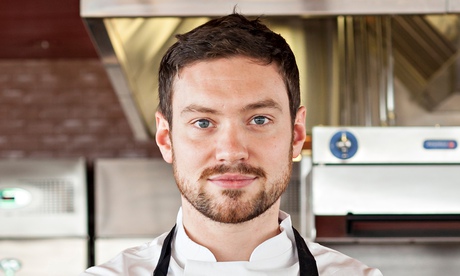

Dan Doherty Dan Doherty: ‘The atmosphere in a 24-hour restaurant can be … interesting.’


Zdenek Honsa, 35
Engineer


I have just changed jobs so as not to work nights. For 18 months I worked as an engineer on the London Eye – mostly maintenance, fixing things that had broken during the day. I worked a 12-hour shift, 8pm to 8am. I didn’t find it hard to stay awake, but it used to take a week to get back to normal. It doesn’t surprise me that there may be long-term health effects. I hope I didn’t do it for long enough to matter. I felt very tired. If I got five hours’ sleep that would be really good. Sometimes it would be four or less, and often not in one go. I also noticed that my digestion went quite funny.


It was nice to get to see the city at night though. It was quite special on the London Eye. Even the commuting was quite nice in the dark. Going over Waterloo Bridge was lovely. And I could see my son during the day more. If I had a choice, I wouldn’t do nights again. But sometimes you can’t pick jobs. PC


Dan Doherty, 29
Executive chef at Duck and Waffle 24-hour restaurant


It’s surreal, that’s the only way I can describe it. Working an eight-hour shift from 10pm to 6am is so much more different from eight hours in the day. I do both throughout the week – post-midnight dining is an integral part of our business – and so my body is in a permanent state of jetlag. At 2am, you get more celebrities; footballers on one table, Made in Chelsea on another. There’s also travellers on different time zones and couples on dates. It’s always strange because all the signals that normally dictate you leaving a restaurant – catching the last tube, the waiters clearing up – don’t apply and the atmosphere can be … interesting.


I do like it, but if you don’t plan it properly, not seeing sunlight can have an adverse affect on your personality – it’s not normal, is it? It goes against everything our bodies do. I’m more spaced out. You eat too much, the same way you do when you travel, and it can make you feel gross. You’re constantly dull-eyed and because I mix it up and it’s not routine, my sleeping patterns are entirely random. My wife works normal hours and I try to cook when I get in so we can at least have breakfast together but even that’s hard – I want sausages and mash after a night shift ends at 6am, not eggs or pastries.


The upside? Sunrise is the most beautiful time to drive through London. NI


Peter Collins, 33
Spacecraft engineer


I work as part of what we call the flight control team at the European Space Operations Centre (ESOC) in Darmstadt in Germany. I’m currently working on a mission called Gaia, which is a star mapper. It was launched in December and is travelling to a point which is 1.5m km from the Earth in the opposite direction to the sun. From there, it will map our galaxy, the Milky Way.


My particular area is the power and thermal systems on Gaia. I have to make sure the spacecraft’s got enough power; that the solar array is working as it should; the distribution of the power through the spacecraft’s working; and, on the thermal side, that everything is in the right thermal ranges.


In the first few months after the mission has launched it’s quite intense. The first few days are critical. Once we’ve launched, for the week following the launch, we’re in 12-hour shifts. So you’re often working through the night. For those four or five days you basically just eat, sleep and work. You get into just working and not really knowing what time of day it is.


It’s totally worth it for me, but then I don’t have to do it for years and years and years. We have what are called spacecraft controllers, who come in when the mission is up and running. They have to be there the whole time to make sure the spacecraft is working. They’re on their own in the control room overnight, day in, day out, night in, night out, which must be tough. I wouldn’t say they’re odd, but it’s not something I could do, because of the loneliness. Personally, I think it’s being on your own for the whole time that would have an effect on your health; it’s losing touch a bit of what’s going on around you because you’re so focused on work.


In my case, I don’t think working nights has had a lasting effect on my health, but during the period that I’m doing it I would say my home life was affected, in that all I was doing was going home to eat, sleep, get up and go back to work again. My wife does a similar job, elsewhere at ESOC. It will be the same for her in a couple of years when her mission launches, but we both understand that it’s only a short-term thing. TM


Is functioning evening shifts negative for you?