already etiketine sahip kayıtlar gösteriliyor. Tüm kayıtları göster

14 Mart 2017 Salı

"Lots of nurses have already left": EU workers head for exit

Since news of the UK’s looming departure from the European Union hit, lots of industries have spoken out about fears of losing European workers. On Monday academics from Oxford University said staff would go if they were not reassured about their future. It comes amid news that EU citizens working in the NHS are thinking of leaving in the next five years.


We asked you about how the loss of European workers may affect, or is already affecting, your sector. We heard from a variety of people, including professors and doctors, who expressed concern that workers are already leaving. Here are a selection of your stories.


Construction worker


John, 51: The unwelcome atmosphere is turning people away from construction


I am an Irish national who has lived and worked in London for nearly 30 years. I’ve made my life and family here. I’ve added to the community and to the industry. Throughout the UK, there is a lack of adequate training or interest from many in joining the construction industry. There has always been a strong interest from migrant communities. In my experience, the unwelcome atmosphere is turning people away and we do not train or encourage people into this industry. We need migrant workers.



People working in construction


Photograph: Martin Dalton/REX/Shutterstock

Financial consultant


Andy, 39: We had a large number of Europeans working here but now they are nearly all gone


I work for a medium-sized financial provider who deals with a very diverse client base from around Europe. I am an EU citizen myself, but I am still in the UK. At work we had a large number of Europeans working in our customer support and sales teams but now they are nearly all gone (they have either progressed somewhere else in London or have left the country). We have now two non-Europeans who both can speak French in customer support. Only one guy in the sales department speaks German. He now does everything for the German client base. If he is sick or on holiday we have no German front office. We have no more Spanish or Italian speakers. The sad part is that overall we have actually increased the number of EU employees, just not in the UK. Around 40-50% of the overall workforce has left as we moved technical departments and finance functions (even director positions) abroad to keep access to our European markets. Most of those who lost their jobs were English. And with every job that moves abroad the London office loses relevance.


The doctor


May, 43: I predict many doctors will leave, especially those now in training


EU nationals working in the NHS express significant concerns regarding their right to stay and their careers. London used to be a world-open and liberal place, welcoming and supportive. Working in the NHS was stimulating and exciting. The outlook for the future is bleak. And there is zero reassuring communication from the UK government. I predict many doctors – especially in training – will leave. I have worked for the NHS 16 years. I have personally spoken to many doctors and midwives who are strongly considering leaving. I know of people who did not renew research contracts but I have not met anyone who has left already.


European people working for the NHS feel utterly disappointed and disillusioned.


May


The team spirit in the NHS was and is stimulating. However, it is mainly created by the multinational teams that have in common a love and dedication to their specialty and medicine in general. British people hugely benefited. With the Brexit vote it feels that this effort, hard work and dedication is completely unappreciated and ignored. It is no surprise European and non-European people working for the NHS feel utterly disappointed and disillusioned. They will go where their work is appreciated.
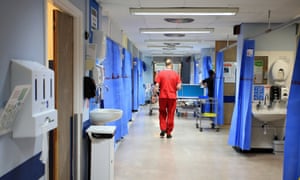


NHS worker


Photograph: Peter Byrne/PA

The entrepreneur


Gerard, 31: I plan to shut down operations in London for Berlin. I don’t want to deal with Brexit


I work for an internet startup across London and Berlin. I see both cities competing already for tech talent. London will definitely lose that battle long-term. I haven’t left yet, but I plan to shut down operations in the UK when article 50 is triggered. I’m lucky enough to have clients in Europe or unlucky enough to have them there – whatever the case I don’t want to deal with Brexit.


Since then I’ve been taking fewer UK clients knowing I will leave. I just feel sadly unwelcome now.


Gerard


I loved London and I will always remember refreshing the Guardian website while counting the referendum results. It was like everything I was building fell apart. Since then I’ve been taking [fewer] UK clients knowing I will leave. I just feel sadly unwelcome now.


The professor


Simon, 51: I am moving to another EU country to take up another university post


I work in the university sector and the lifeblood of our work is provided by academics and researchers from all over the world, particularly from the EU. In addition, many of our students come to the university to study from abroad. The European Union’s framework funding programmes including Horizon 2020 have been key to ensuring that the UK punches well above its weight in research and development. The loss of EU workers and access to the networks provided by the EU will have a devastating effect on the UK higher education sector.


I am a UK national who has decided to leave. I am moving to another EU country to take up another university post. Although Brexit was not the only reason for this move (the new role will be an advancement in my career), it was a decisive factor in making me apply for the job given the future uncertainties in the UK higher education sector.


The nurse


Karen, 40: Five nurses have left already


Before [the] Brexit [vote] we used to have hundreds of applicants in nursing. Now we hardly see 50. All staff are tired and worried about what will come next. In my department 60% of nurses are EU citizens and already five of them have handed in their notice. I am an EU citizen myself and I’m already making plans to leave UK for good. The healthcare sector will collapse and I don’t want to be part of it.


Web designer


Ben, 25: A European worker recently left. It was a big loss for the team


I work in web design and development. We’ve benefited greatly from the expertise of EU workers in our team. But now one of our main designers, responsible for delivering engaging websites, print media, presentations etc for clients has left. Her husband is in research of some sort (I’m not sure exactly what it is) and his funding was moved out of the UK. Given that she wasn’t feeling welcome in the UK any more, it was a no-brainer for them to simply move. It is a big loss for the team.


  • Some names have been changed


"Lots of nurses have already left": EU workers head for exit

16 Aralık 2016 Cuma

Top 10 Medicines Already in Your Spice Rack

Could powerful natural medicine already be in your spice rack right now?
In Western culture, we typically look at our spice rack only as a means to flavor our meals. Elsewhere around the world, however, other cultures have known about the medicinal properties of these spices and have used them as such for thousands of years. “Let thy food be thy medicine, and let thy medicine be thy food.” Those are the famous words from Hippocrates, who figured this out and healed people with these spices thousands of years ago. Let’s take a look at the top 10 medicines already in your spice rack.
1. Turmeric
It is widely known that curcumin, the primary compound in Turmeric that provides therapeutic properties, has anti-inflammatory effects. However, Turmeric’s therapeutic properties don’t stop there. A study conducted at UCLA demonstrated that amyloid plaques found in Alzheimer’s disease could be cleared with curcumin. Further evidence of this is seen in the research indicating a lower incidence of Alzheimer’s in India, where 80% of the world’s Turmeric is consumed on a daily basis.


2. Cinnamon
Cinnamon is a warming spice made from the inner bark of several tree species from the genus Cinnamomum. The research indicates that cinnamon has antioxidant, antimicrobial, cholesterol-lowering, anti-tumor, and immune-boosting effects. In vitro studies demonstrated that cinnamon can act as an insulin mimetic, which can boost insulin activity and stimulate glucose metabolism.


3. Clove
Clove is found in the majority of every anti-parasitic formula on the market and for a good reason. Clove can stun and release parasites of all kinds from the body. Parasites can wreak havoc on the body and tissues by depriving you of the nutrients found in the food you eat. Parasites can also influence chemicals in the brain that make you crave sweets/sugar, influencing your habits to get what they want to eat. Clove also has oral hygiene properties to keep bacteria from getting out of hand and is a great adjunct to your oral hygiene protocol.


4. Oregano
Although the oregano in your spice rack is the dried herb, oil of oregano is one of the most powerful antibiotics/antifungals available for athlete’s foot and other persistent chronic infections. A study published in the Journal of Applied Microbiology revealed oil of oregano to be more effective than antifungal drugs in treating Candida albicans, a prominent fungal infection that impairs health and immunity.


5. Garlic
Garlic is one of the most powerful antibiotics found in nature. Garlic has been shown to be therapeutic with cardiovascular problems, cognitive impairments, blood quality, immunological health, and also inflammation. Research published by Cancer Prevention Research outlined the efficacy of garlic to minimize proliferation of esophageal cancer, stomach cancer, prostate cancer, and colorectal cancer. This makes garlic one of the most affordable cancer treatments available, as you can often find it for under a dollar in your produce section.


6. Cayenne
According to the University of Maryland Medical Center, cayenne pepper reduces the amount of substance P, a chemical that carries pain messages to the brain, providing pain relief properties. Cayenne is also effective as a cream to reduce itching and inflammation from psoriasis.


7. Olive Oil
Olive oil, a staple in the Mediterranean diet, has antiviral, antifungal, and antibacterial properties. Illnesses of the heart are lower in the Mediterranean region, and research indicates Olive Oil may be supporting cardiovascular health with its lipid and antioxidant profile. Instances of cancer are also lower in regions where Olive Oil is most consumed and produced.


8. Fennel Seeds
If you’ve ever been to an Indian food restaurant, you’ll notice there is often a little container of fennel seeds near the exit or on the table. The reason is due to Fennel Seed’s ability to work as both a breath freshener and also a digestive aid. Fennel seeds lower excess gas, bloating, and discomfort after eating heavy meals. Fennel seeds also contain nitrates that may be beneficial for the vascular system.


9. Thyme
Thyme is a fragrant herb, and the essential oils that give Thyme its aroma and flavor have been shown to increase healthy fats in cell membranes and cell structures, including the mind-supporting DHA, after consumption. Thyme is also one of the leading antifungal herbs, often being used to keep candida infections under control. The University of Michigan Health System shows Thyme being connected to treatments for lung infections, bacterial infections, lice, halitosis, and indigestion.


10. Ginger
Ginger is a very powerful and diversified medicine in your spice rack. Ginger offers support for digestion, metabolism, infections, flu, common cold, sinus issues, and blood quality. Ginger is also found in the majority of leading inflammation supplements, alongside Turmeric. Additionally, Ginger has been shown to have pain-relieving properties, anticancer properties, and is great for soothing nausea. Ginger completes our list of the Top 10 Medicines Already in Your Spice Rack.


Learn more at http://earthfoods.info and follow Earth Foods on Facebook: http://facebook.com/earthfoods


Sources:


https://www.ncbi.nlm.nih.gov/pmc/articles/PMC2781139/
https://www.ncbi.nlm.nih.gov/pubmed/20924865
https://www.ncbi.nlm.nih.gov/pubmed/27568869
http://umm.edu/health/medical/altmed/herb/cayenne
http://www.nature.com/ejcn/journal/v57/n1/full/1601497a.html
https://www.ncbi.nlm.nih.gov/pubmed/23240972


Top 10 Medicines Already in Your Spice Rack

22 Kasım 2016 Salı

Abortion rights are already under siege – and it"s only going to get worse | Jessica Valenti

Imagine being so desperate to end a pregnancy that you sit in a bathtub, gird yourself, and stick a wire hanger up your vagina and into your uterus. You don’t have anesthesia, but you do it anyway. You start to bleed, badly. After you go to the hospital for help, you don’t get sympathy – you get arrested.


I don’t describe this horrific scenario to remind you of a time when abortion was illegal and how bad it was for women. Because this didn’t happen in the 1950s; it happened last year.


Just a few months before Donald Trump said women who have abortions should be “punished”, a woman in Tennessee was arrested for trying to end her pregnancy with a hanger. And on Tuesday, a week after Trump was elected to be the next president of the United States, this woman was charged by a grand jury with aggravated assault with a weapon, attempted procurement of a miscarriage, and attempted criminal abortion.


Jessica González-Rojas, executive director at the National Latina Institute for Reproductive Health, said: “These new charges seek to punish her even more severely and are an affront to justice and basic human dignity.


“No woman should fear arrest or jail time because she ends her pregnancy or seeks medical help in this situation.”


“Women and reproductive rights organizations should be doing all they can to steel themselves for the battles to come”

This is not an isolated case. Before her conviction was overturned, Purvi Patel in Indiana was sentenced to 20 years in prison for inducing an abortion. Bei Bei Shuai, also in Indiana, was charged with murder after a suicide attempt resulted in her pregnancy ending. So let’s be clear: women are already being punished for abortion.


This Handmaid’s Tale nightmare will only get worse once Trump takes office. Whatever his personal beliefs on abortion – like everything else, this is a topic he’s flip-flopped on over the years – he has vowed to appoint supreme court justices that will overturn Roe v Wade, leaving the issue up to the states. When questioned about this, he callously remarked that women who live in states where abortion is illegal could just travel to a different state.


Mike Pence, the incoming vice-president, signed one of the most restrictive abortion laws in the country as governor of Indiana, and has said he wants to see Roe “consigned to the ash heap of history where it belongs”.


These are not men who are thinking about – or who even understand – the consequences of banning abortion.


The woman in Tennessee, who has already been in jail for nearly a year, is one of countless American women who try to self-abort. I say “countless” because we literally do not know the number of people who attempt their own abortions. We just know that it’s a lot.


One study found that in Texas alone, more than100,000 women had tried to end their own pregnancies. You will not be shocked to find out that abortion is extremely difficult to access in Texas. The same is true in Tennessee, where 96% of counties have no abortion provider.


Not all women induce their own abortion because of a lack of access. Some simply want to forgo seeing a doctor, and would prefer home abortions. Last year, Daniel Grossman, an obstetrician-gynecologist and vice-president for research at Ibis Reproductive Health, told me that some women self-induce because they’re “the kind [of person] who like to do herbal treatments or take vitamins for their healthcare in general”.


If reproductive rights were not in such imminent danger, now might have been a good time to start expanding options for women who don’t want clinic care but instead want to end their pregnancies at home. But now it’s hard to imagine that pro-choice organizations will be doing anything other than protecting rights already won.


“No woman should fear arrest or jail time because she ends her pregnancy or seeks medical help in this situation.” – Jessica González-Rojas

In fact, women across America are preparing for the worst. The news of Trump’s win sparked an increase in the number of women seeking long-term birth control measures such as IUDs, fearing that their insurance coverage for contraception would soon be a thing of the past.


The defensive crouch right now is a smart strategy. Women and reproductive rights organizations should be doing all they can to steel themselves for the battles to come – not just on a policy level, but in terms of everyday needs. Those of who can afford to do so, for example, might consider buying large quantities of Plan B while it’s still available over the counter – stockpiling the medicine in the event that it becomes inaccessible and other women need it. And if it were not illegal, I might encourage doctors and nurses to start putting aside misoprostol (the drug used in medication abortions) in the event that abortion is banned in their state or others.


Someone who wants an abortion will find a way to get one, no matter what the law is. So let’s make sure they can do that safely, no matter who the president is.


Abortion rights are already under siege – and it"s only going to get worse | Jessica Valenti

28 Ekim 2016 Cuma

UK already celebrates LGBT History Month | Brief letters

“Asked … whether he thought there should be a gay history month along the lines of black history month, Corbyn said: ‘There could be that…’ ” (Report, theguardian.com, 27 October). Lesbian, Gay, Bisexual, Trans History Month has existed in the UK since 2005 and has a major impact on schools throughout the country. We still celebrate it every February. I should know because I am the CEO of the charity that runs it.
Tony Fenwick
CEO, Schools Out UK/LGBT History Month


I am grateful to Mr Fox for explaining that the EU is putting politics over prosperity (Fox warns on tariffs, 27 October) as I was assuming that they were putting principles over profit.
Steve Shearsmith
Cottingham, East Yorkshire


Surely, with the active use of stents and microchip implants, the medical profession can invent some non-invasive valve procedure that can switch on and off the effect of a vasectomy (Letters, 27 October)? I freely offer this idea to the world as long as it is for ever known as a stop-cock.
Stephen Andrews
(Happily had the snip 30 years ago)
Charlbury, Oxfordshire


With Bake Off the nation’s favourite programme, and 10 million watching the final episode (Royal picnic wins Bake Off crown for teacher, 27 October), is it just a coincidence that, in the same week, Public Health England issue dire warnings about a major increase in Type 2 diabetes?
Peter Davis
Dovercourt, Essex


Bob Dylan did not “change rock from teenage to adult music” (Notes & queries, 27 October). His fans simply got older.
Michael Short
St Leonards-on-Sea, East Sussex


You picture Christ’s tomb (Jesus Christ’s tomb uncovered, Eyewitness, 28 October). No mention of any bones. That would be an atheist’s dream, surely!
Jerry Stuart
London


Join the debate – email guardian.letters@theguardian.com


UK already celebrates LGBT History Month | Brief letters

26 Eylül 2016 Pazartesi

I"ve worked as a GP receptionist under a year and I"m already burnt out

It’s only 8.15am and the appointments for the day are already fully booked despite our appointment booking line opening at 8am. Less than a year ago this was an anomaly, now it’s the norm, as are queues out the door when we open. I spend the rest of the morning bearing the brunt of patient irritation, which is mostly aimed at our lack of appointments. I share their frustration because the service is substandard and it only seems to be getting worse.


The calls keep flooding in, the phone rings all day and I often finish work with a headache from the sound. The calls can be incredibly stressful one moment – talking to someone who is struggling to breathe – to mundane the next with patients who are convinced that their three-day cough constitutes an emergency. Patient anger often unfortunately comes back on to the receptionists, I wish they could see the wider picture and direct their anger at the government that is responsible for cutting their services.


Much of my job involves reducing doctors’ workloads so they can spend more time with patients. The administration aspect of the NHS is what keeps the service running. However, the demands of the job and the ever rising number of patients relative to staff make it impossible to do the job well. I think back to my early enthusiasm and my wish to help patients. Now I just feel the steady erosion of my capacity to help. I can’t offer people appointments that aren’t there. I can’t give any patient any real time and attention because there are just so many.


The stressful demands of the job mean that there are high levels of staff sickness; this makes staff morale low and turnover high. I’ve been in the role for less than a year and I’m already burnt out. I’m exhausted all the time and the stress from the job has affected my personal life, making it difficult to sleep and giving me a constant sense of worry. I’ve even been referred to counselling by my doctor because of the stress and anxiety my job causes me, ironically further burdening the NHS.


I work in a deprived area in the midlands and I’ve seen firsthand the long-lasting and far-reaching effects of poverty. The lack of investment and funding in the NHS means that we are having to do more with a decreasing level of resources and a lot of cuts mean people are getting put back on to their frontline GP service.


We have numerous patients with complex mental health issues who we are called about every day, usually by social workers or concerned relatives, because the support they need has been cut elsewhere. There’s the heroin addict who goes in and out of prison and mental health units – every time he is released he goes missing for days until we are informed that he has been sent back to another institution.


There was also a patient who was terminally ill with chronic obstructive pulmonary disease, but also suffered from severe anxiety and schizophrenia, who called us or the emergency service in a frantic state every day for months until he died. He would often be having panic attacks on the phone or hearing voices – this was incredibly distressing as I felt underprepared to deal with such complex issues. One woman was so distressed after cutbacks on the time she received from carers that she attempted suicide just weeks later. She now remains on an A&E ward.


Some people’s lives are so chaotic and their support networks so poor that it seems that the NHS is the only consistent factor in their lives. How will they cope when services they rely on continually suffer from cutbacks? Without drastic improvements in funding and a greater number of staff, these issues will only get worse. I worry about the future of our practice, our patients and the NHS at large. But for now I’m overstretched and exhausted, I’m certain that neither I nor the NHS can keep this up for much longer.


If you would like to write a blogpost for Views from the NHS frontline, read our guidelines and get in touch by emailing sarah.johnson@theguardian.com.


Join the Healthcare Professionals Network to read more pieces like this. And follow us on Twitter (@GdnHealthcare) to keep up with the latest healthcare news and views.


I"ve worked as a GP receptionist under a year and I"m already burnt out

17 Ağustos 2016 Çarşamba

There may already be a Zika outbreak in Texas, but we probably wouldn"t know

If you were bitten by a mosquito, and within two weeks had a fever, bloodshot eyes, a rash and felt generally achy, you would have four classic symptoms of Zika. But if you or your sexual partner didn’t travel to Latin American, you might also have a hard time getting tested.


That’s because Zika tests are complicated, time-consuming, sometimes inaccurate and expensive. These obstacles have led some scientists to believe that several states at risk for spread of the disease may already have Zika outbreaks, without even knowing it.


“There is not active surveillance going on in the at-risk states in the United States,” said Peter Hotez, dean of the National School of Tropical Medicine at Baylor College of Medicine in Texas. “I think there’s not just Zika transmission going on in Miami, it’s going on all up and down the Gulf Coast and in Arizona, it’s just that nobody’s looking.”


The only confirmed cases of Zika caused by local mosquitoes in the continental United States are in Miami, Florida. Federal officials have since issued a travel warning for the area, asking pregnant women or those hoping to become pregnant to avoid the Wynwood neighborhood. There, local mosquitoes infected 15 people with the virus.


Other Gulf coast states are also considered to to be at high risk for local transmission of Zika virus. That is because Aedes aegypti mosquitoes are endemic, and multiple travelers have returned with the infection. But with laboratory limitations, even states with disease-spreading Aedes aegypti mosquitoes may not be able to surveil non-travelers for the virus.


“There is a limitation, and local transmission could slip through, but it’s the best we’ve got,” said Frank Welch, the medical director for Louisiana’s center for community preparedness.


Related: Zika virus scare is turning Miami’s hipster haven into a ghost town


Louisiana, long-known to be a haven for mosquitoes, is considered a state at-risk of Zika transmission. There, 22 cases of travel-related Zika has been confirmed by the Centers for Disease Control and Prevention (CDC).


“The big fear, of course, is we’ll figure this out seven, eight, nine months from now, in the spring of 2017, when we start seeing babies show up with microcephaly,” said Hotez.


Meanwhile, for community health centers in another Gulf Coast state, Texas, the virus recalls an earlier epidemic that left public health officials flat-footed.


“We’ve never faced something like Zika before. We faced, what was it? H1N1,” said José Camacho, executive director of the Texas Association of Community Health Centers. Member clinics serve about 1.3 million low income Texans. “Over night we were overwhelmed, and I guess nobody was ready for that either. And we’re fearful that some of the same things are playing out here.”


When H1N1 broke out in Texas, the CDC told doctors that they were required to test for the flu strain before prescribing antivirals, Camacho said. He recalls the first H1N1 case occurred on a Friday night. By the weekend, the CDC arrived. Then, it was discovered a standard flu test couldn’t detect the strain.


So the CDC provided new H1N1 tests. Five of them. For all 1.3 million of the Texans served by Camacho’s member organizations.


“Number one, in terms of screening, there’s very limited resources,” Camacho said. “We saw the same thing in H1N1, where the flu test did not work. They actually had to develop a test and eventually change the protocols to not require a test, but delegate it more to the physician’s knowledge at screening.”


Officially, the CDC recommends that patients with three of the aforementioned Zika symptoms be tested if the patient is a pregnant woman, or a woman trying to get pregnant, who lives in or has traveled to an area where Zika is being actively spread.


That means that many people who do not fit this profile, especially men, may be left untested even though the disease is spread sexually.


Some public health officials, like Welch, said testing more Americans would require exorbitant resources.


“Let’s say this test was incredibly available – we would have to test every single person in the US where there is the possibility of Aedes,” said Welch. “We would not only have to test them today, we would have to test them for the duration of the summer.”


“A once a week Zika test for everyone in the southern United States and California –that would be more expensive than building a wall across both our Mexican and Canadian borders,” he said. “So, you would have to decide, since the test is in fact limited in availability and expensive.”


Hillary Clinton talks to a pregnant woman during a health center visit in Miami, Florida.


Hillary Clinton talks to a pregnant woman during a health center visit in Miami, Florida. Photograph: Chris Keane/Reuters

Scientists don’t expect large-scale outbreaks in the continental US, like those that have taken place in Puerto Rico or Brazil. Texas also recently updated its guidance to include recommendations to test people who are symptomatic, but haven’t traveled to Latin America.


Even so, Zika presents its own challenges. Only one in five people infected with the disease are symptomatic. So in order for public health officials to locate a Zika case transmitted by local mosquitoes, a symptomatic patient (already just 20% of the infected population) would need to seek medical treatment. There is no guarantee a patient would even feel the need to see a doctor, since symptoms are generally mild. Then, doctors would have to rule out all other causes of such common symptoms.


“Say, for example, that person did show up at a healthcare provider,” posits Welch, “They wouldn’t be automatically turned away,” he said. “[But] you probably know the symptoms of Zika are pretty close to about 6 million other diseases.”


In the Wynwood neighborhood of Miami, for example, clinicians went over and above CDC guidelines to test a symptomatic patient who showed up at an emergency room without traveling abroad.


“We’re not going into community health centers, we’re not going into emergency rooms, we’re not going into clinics identifying people with fever, or a rash, and seeing if they have Zika,” said Hotez. “It’s not being done.”


In part, this is because of the limitations on Zika testing methods. The two most common ways to test for the virus are both manpower intensive.


“They absolutely take a specialized skill,” said Kelly Wroblewski, director of infectious diseases for the Association of Public Health Laboratories. Tests for past infections can be particularly tricky. “You’re going to get more false positive results, that’s just the way it works with any kind of assay.”


In the meantime, Camacho is rationing 50,000 bottles of donated mosquito repellant to the roughly 400,000 women of child-bearing age served by his organizations. Hotez is meeting about testing guidelines, and cities and states are increasingly broadening their testing guidelines.


“It’s still patchwork quilt,” said Camacho.


There may already be a Zika outbreak in Texas, but we probably wouldn"t know

15 Ağustos 2016 Pazartesi

I"m a new junior doctor and I already hate my job

I’m scared, I’m exhausted, and I hate being a doctor.


This was not the plan. Sat on the kitchen floor of our flat, tears poured down my face as my partner looked on, stunned and worried. My third day on the wards was over, and I never wanted to go back.


I’d certified the death of my first patient – examining the cold body of a woman I had cared for, trying to forget that this was also my first time in a mortuary. I’d struggled to draw blood from patients who didn’t deserve my trembling, wide-eyed persona stuttering towards them with a needle. I’d welled up with tears as I sat in front of a computer trying desperately to remember how to prescribe a drug, paralysed with the knowledge of the harm that could befall my patients if I got it wrong.


Related: Hospital A&E wards ‘in crisis over shortage of emergency doctors’


Throughout medical school, I had been told that my foundation years – the first two years of a doctor’s career – would be totally different to my training. I expected to be thrown in at the deep end, but I expected to be supported. I expected a well-oiled team around me, keeping an eye on me, never leaving me feeling alone. Sat at that computer – the only doctor on the ward on my second day in the job, praying no one would ask me anything – I was clueless, exhausted, and had no idea what to do about it.


On our first day on the wards as new doctors, the more senior doctors were also new to the hospital. This was also the case on the second day. The well-oiled team was not there – it hadn’t even been created yet. After years of scribbling in notes, and learning to prescribe on neatly laid-out forms, I was faced with a system computer I’d never used, on which I was expected to request every test and order every drug.


I barely spoke to any patients as I followed my consultant on the ward round. I then sat at the computer, and wished, as I ham-fistedly hit the keyboard, that I had learned to type properly as a child. I tried not to think about how the patient who had reduced fluid intake was still taking in more water than me that day.


After finishing my jobs, which was only achieved two (unpaid) hours after I was supposed to end for the day, I did a quick walk round the ward, to make sure I hadn’t missed anything with my patients, to reassure myself that it was ok to leave them to the similarly overstretched night team. Patients and relatives seemed glad to see me, asking questions about their care, commenting on my having been there for 12 hours already (though none of them seemed surprised).


That walk-around was probably the only reason I made it back in the following day. Having the chance to speak to the people I was trying so hard to care for, I was able to glimpse the reasons why I’d started my training – that I would help people, that I would learn from my patients, that I would make a difference. That night, my partner arrived home to find me passed out on our bed, still wearing my coat, my microwavable supper still in the fridge.


I received my rota for this job three days before it started. Only then was I able to confirm whether I could attend my oldest friend’s wedding at the end of August. A week in, I still have no contract, and no one can tell me how much I can expect to be paid. My parents and partner are keeping me in food and rent until the end of August and my first payday, and I have no idea when I’ll be able to start paying them back.


Related: ‘I prick my finger while taking blood’: my first week as a junior doctor


I hope and pray it will get better. We already know that gaps in rotas caused by understaffing are bigger than ever. The whole NHS seems to be teetering on a precipice, with everyone ploughing on, but unable to ignore that this is unsustainable without proper funding and better staffing.


Many of my patients don’t need to be in hospital. They need to be in the community, where they are less likely to be stuck in bed for hours, less likely to contract the infections that, despite our best efforts, will always populate hospitals full of sick people. But social care is in even worse shape than the NHS, so we’re having to pick up the slack (and the cost).


“It’s always a baptism of fire”, people tell me. “That’s how you learn”. But I don’t want to risk people’s health for the sake of my own education.


I’m scared. I’m already exhausted. I’m not sure I want to be a doctor anymore, and I’ve only just begun.


If you would like to write a blogpost for Views from the NHS frontline, read our guidelines and get in touch by emailing sarah.johnson@theguardian.com.


Join the Healthcare Professionals Network to read more pieces like this. And follow us on Twitter (@GdnHealthcare) to keep up with the latest healthcare news and views.


I"m a new junior doctor and I already hate my job

18 Temmuz 2014 Cuma

How one in four children has already suffered sunburn this year

Columnist


A survey by Boots is flagging up the want to maintain children protected in the sun for the duration of this heatwave and then all summer long


BY Katy Young |
18 July 2014


A quarter of youngsters in the United kingdom have already been stung by the 2014 sun – which is prior to breaking up for their summertime holidays, according to a new survey by Boots .


That indicates one particular in four children has completely damaged their skin – some thing half of individuals surveyed didn’t realise (a quarter of a person’s lifetime sun publicity is acquired before the age of 18). 42 per cent of the 500 Uk parents who took element in the survey admitted that their little one below ten had at a single time been sunburnt.


Read – ten best sun hats


“This research exhibits that several of us have been caught off guard when it comes to the correct sun protection for our young children and, with the current heat wave, we are urging all parents to be much more vigilant with regards to sun safety, ” explains Clare O’Connor, Boots Soltan suncare professional. “Sunburn takes place in a quantity of minutes and as kids begin to take pleasure in their college holidays, paying far more time out in the sunshine, we want to emphasise how important normal application of a substantial SPF is – every day and throughout the day.”


Study – How to dress in sun cream safely


The burning issue is a lot more prevalent on Uk soil, due to the fact although eight out of 10 dad and mom agree that proper application of sun cream is a provided on vacation, at house it is a different story. Over half of parents will only remember to reapply sun safety goods once their child has currently begun to turn pink when in the Uk – it really is also most likely that on home turf we have not used sun cream on our youngsters since quite simply we’ve been caught out by the weather, or we’ve not received any safety aspect to hand says one particular third of mother and father.


“We’re encouraging mother and father to make sun protection a leading priority this summer, whether or not at property or abroad,” adds O’Connor. “As soon as the skin is pink, the injury has been accomplished.”


Study – The Green Edit: sensitive skin in the sun


The good information is that we can safeguard our children’s skin with correct safety, very effortlessly. “Whilst sitting in the shade or covering up with a T-shirt can help reduce exposure to UV rays, however they will not provide full protection,” says O’Connor, which is in which high SPF goods consider a lead function. “Applying sun cream just takes a couple of minutes but helps shield your child’s skin from the damage the sun causes now and any longer term effects of the injury.”


How one in four children has already suffered sunburn this year