30 Aralık 2016 Cuma

Bill Gates: world faces decade at risk from antibiotic-resistant bugs

People across the world, particularly those in developing countries, face a decade at risk from pandemics spread by antibiotic-resistant bugs, the billionaire Bill Gates has warned.


Gates, who made his fortune with the Microsoft Windows operating system before becoming a philanthropist, said the success of antibiotics had created complacency that was now being exposed by the rise of microbial resistance to the drugs.


“I cross my fingers all the time that some epidemic like a big flu doesn’t come along in the next 10 years,” Gates told a special edition of Radio 4’s Today programme guest-edited by Dame Sally Davies, the chief medical officer for England.


“I do think we will have much better medical tools, much better response, but we are a bit vulnerable right now if something spread very quickly like a flu that was quite fatal – that would be a tragedy and new approaches should allow us to reduce that risk a lot.”


Gates said it was crucial for wealthier countries to step in to help the developing world fight disease, both for humanitarian reasons and for their own health security.


Although mistakes were made, criticism of the World Health Organisation (WHO) during the Ebola crisis in west Africa was unfair, he said, because it was not funded or staffed to do all the things that observers wanted it to do.


International cooperation had led to the eradication of smallpox, and was on the verge of eradicating polio, he added.


“The cooperation that we have seen, I think, needs to intensify,” Gates said. “It’s the only way that global problems like epidemics will get solved and so [for] all the people who are negative on WHO, the message to take away from that is not that that kind of multilateral cooperative effort is doomed and the money is not well spent, rather that we actually need to broaden their capacity. We actually need to dedicate ourselves to this global cooperation.”


In September the UN secretary general, Ban Ki-moon, warned that antimicrobial resistance was a “fundamental threat” to global health that risked making high quality universal healthcare impossible.


It is estimated that more than 700,000 people die each year from drug-resistant infections, though it could be much higher because there is no global system to monitor the figures. There has also been difficulties in tracking death tolls even in places where they are monitored, such as the US, where tens of thousands of deaths have not been attributed to superbugs, according to a Reuters investigation.


The European Centre for Disease Prevention and Control reported in November that illnesses resistant to so-called last-line antibiotics – drugs kept in reserve for use against pathogens that have proved resistant to all other antibiotics – were on the rise in the continent.


Without them, some infectious diseases could become untreatable and some forms of major surgery would again become perilous.


Davies said Britain’s health service was well placed to handle a flu pandemic, although it would still take as long as six months to “produce enough vaccine to start putting it into people”. She was less optimistic about how resilient the rest of British society would be to an outbreak.


“It’s not just the NHS,” she said. “It’s how would our social care system cope with people who aren’t ill enough to be in hospital but need extra support? It’s how would our economy cope if a large proportion are too ill to work? When we have a just-in-time ordering policy for delivery of food, petrol, whatever.


“And if you think about the issues that could happen here if we had a recurrence of the 1918 type flu, then what would it be like in middle- and low-income countries where they don’t have the health systems to look after the patients?”


Bill Gates: world faces decade at risk from antibiotic-resistant bugs

"I exercise a lot but drink a bit too much": middle-aged readers" health fears

The government has launched a new health drive aimed at 40- to 60-year-olds, 83% of whom are either overweight, drink too much or are physically inactive.


With its One You campaign, Public Health England wants to help middle-aged people stay in shape. It says aspects of modern life – such as sedentary lifestyles and the consumption of junk food – are bad for our health, but it is those in middle age who are suffering the consequences most.


We asked our readers what they thought of the campaign and whether they had any concerns about their own lifestyles. Here’s what you told us.


Caroline, 58, from Essex: ‘There’s no incentive to lose weight when everyone you see is bigger than you’


Caroline sarychkin

I feel like I am generally in good health despite having an underactive thyroid and high cholesterol (I take medication for both these things). My weight is creeping up, however, which aggravates my arthritic knee – the legacy of a motorcycle accident in my 20s. My New Year resolution is to do more walking. I’ve got borderline osteoporosis, a condition that weakens bones, so know it’s important to build bone density, but having a desk job makes this hard.


I know I am overweight at 5ft 4in and 11st, but a lot of people are bigger than me and tell me I am “slim”. My clothes size has not changed over the years: I still wear a size 12, the same as when I was a teenager. There is no incentive to lose weight if nearly everyone you see is bigger than you.


I doubt that the One You campaign will make much of a difference. We all know we should eat healthier, be active and drink and smoke less but how many people who don’t do this already will really be bothered to change?


Kevin Varney, 49, from Reading: ‘I exercise a lot, but drink a bit too much’


Kevin Varney

My health is pretty good at the moment. My body mass index is not much over 25. I exercise quite a lot, but I drink a bit too much. I probably drink about 14 pints, sometimes a small bottle of wine and two or three mixer tins – for example, of gin and tonic – a week.


I do worry about it a bit. If I am socialising with friends, that will involve drinking, but if I am on my own at the weekend, I will drink too. However, I am suspicious of medical guidelines. I suspect there is a puritanical element or a wide safety margin in them. I suspect the government would like to ban alcohol altogether if they could.


I am surprised by the rates of inactivity reported recently – it should be possible to fit in some exercise while working. You can cycle to work, jog over lunch or head to the gym in the evening. I suspect a lot of people just hate exercise. I don’t think a campaign to change this will help. People are constantly being told they are too fat and don’t take enough exercise. Telling them again won’t make much difference.


Gita Bapat, 51, from London: ‘Long working and commuting hours make it harder to stay in shape’


I’ve never smoked (inherited asthma) and am a moderate drinker – around 5-6 units a week – but I am about 1st overweight. This is my main concern as I am quite vain. I have dogs and walk them most days for around an hour and a half. I am also trying to start running again. When I lived in Paris I ran 25km a week. My goal is to run 5km three times a week.


Modern lifestyles – long working and commuting hours – make it harder to stay in shape, as do care obligations, such as looking after children and older people. It’s easy to feel a sense of hopelessness if one cannot live up to the unrealistic and Photoshopped standards of people portrayed in the media.


Medi Parry, 59, from north Wales: ‘I want to be active, self-sufficient and healthy as I get older’


medi parry

We are living longer and I don’t want to be one of those elderly women who can’t do anything for themselves. I want to enjoy as much life as possible with my daughters and their families. I am an independent heritage consultant and want to keep working for as long as I can. I want to be active, self-sufficient and healthy as I age. I try to keep fit but hate the gym. I like to cycle but there are no cycle paths near where I live. I exercise by using the stairs where possible. I also jog in the kitchen while I’m waiting for the kettle to boil and go to a Zumba class once a week.


It’s not just modern lifestyles that make it hard to stay fit. The easy availability of high-calorie food also makes it difficult. Chocolates, sweets, pizzas and takeaways – they’re all too easy to get hold of and it’s hard not to eat them when you’ve been working hard all week. Our love of the internet means that we sit down for hours on end to engage with it; work is far more internet-based now and so more of us are tied to our desks for hours.


I’m not sure whether this campaign will work, it depends how it’s done. GPs find it difficult to broach the subject of weight with their patients as they mostly respond negatively (I have GP friends who confirm this – one has been reported for having “offended” his patient). It’s a good idea to flag up this research, and a preventative campaign should be more cost-effective than dealing with the long-term consequences of obesity in old age. However, I’m sceptical of the impact of this campaign unless it is backed up by some sort of legislation. The NHS has been running smoking cessation campaigns for decades but smoking has only really lessened following the ban in public areas.


Alex Dean, 40, from Kent: ‘I try not to drink during the week but usually buy a bottle of red on Friday’


Alex Dean

I don’t worry about my health but I do limit the amount I drink, I exercise and only eat healthy low-sugar foods. I don’t think modern lifestyles are to blame for the rise in obesity. I have two young kids, work in an office and have a minimum 15-hour commute each week but still find the time to exercise. It is a state of mind.


I have always been aware of my health and enjoyed walking and climbing, but last year I stepped it up and did my first triathlon. Having a date set for that (I gave myself six months to train) really helped me achieve my goal. Also taking on three new sports, especially swimming, was really beneficial – I gained a lot from the learning process. I loved completing the triathlon and have already booked myself into a longer one for next year. Again having “an event” was something to aim for. I regularly got out and trained.


I am not sure whether the campaign will work but it’s good to try something. I also believe schools play a big role and we need to educate on the importance of fitness from a young age.


I try not to drink during the week but usually buy a bottle of red on Friday. I drink it over Friday and Saturday night. Not having drink in the house for the rest of the week makes it easier to manage for me. I’ve managed to cut down by knowing my wife does not like it if I am drunk or drinking too much. I also think it would negatively affect my health and motivation if I drank more.


"I exercise a lot but drink a bit too much": middle-aged readers" health fears

Norovirus cases in England at highest level in five years

More patients have been struck down with vomiting bug norovirus this year compared with the previous five years, according to official figures.


Data from Public Health England shows reports of the bug had reached 2,435 this winter – 12% more than the average for the same period over the last five years. The figure is also 71% higher than the same period last year, although last winter had unusually low levels of norovirus.


In the week ending on Christmas Day, the outbreaks of vomiting and diarrhoea resulted in more bed closures than during the same period last year – rising from an average of 559 beds closed per day to 699. Hospitals reported 20 outbreaks of norovirus in the first two weeks of December, 17 of which led to bay or ward closures and 13 of which were confirmed as the bug.


In total so far this season, there have been 163 hospital outbreaks reported.


Nick Phin, deputy director of the national infection service at PHE, said: “Norovirus is a common cause of illness during winter. Exactly when the peak in activity occurs will be different each winter but levels seen so far this year are not unexpected compared with the previous five years.”


The number of laboratory reports of the bug rotavirus this season is 1,136, which is also 3% higher than the average for the period from 2003 to 2013.


In early November the Mexican restaurant chain Wahaca closed several branches in London after more than 350 customers and staff fell ill with suspected norovirus. PHE and environmental health officers were called in after the suspected outbreak of the winter vomiting bug struck at nine restaurants.


NHS England also released figures showing there were 291,808 calls to the NHS 111 service in the week ending on Christmas Day as temperatures plummeted and a cold weather alert was issued. This was nearly 9% lower than the number of calls to the helpline in the same week last year. Of calls answered, 93.2% were answered within 60 seconds and 1.5% of patients abandoned their calls after waiting 30 seconds.


Norovirus cases in England at highest level in five years

People may be ready to pay extra penny on tax for NHS, Tim Farron says

People may be ready to pay an extra penny on income tax to fund the NHS and social care, Tim Farron, the leader of the Liberal Democrats, has said.


Farron said voters had reached the stage of not believing the NHS’s problems could be solved through efficiency savings and might be willing to pay more if they were convinced it would go to the health service.


He said he did not want to pre-empt the conclusions of an independent panel formed by the Lib Dems, which will look at possible taxes to help the NHS.


But asked if he believed people would be happy to pay an extra penny on income tax to improve health services, Farron said: “Yes, potentially, if people see this as the way of solving a problem that is increasingly apparent to people.


“Health and social care personal crises in families are growing by the week. If we can convince people this is the way to meet those needs in a tangible way, then yes, I think so. I think we’ve gone past the time where we can pull the wool over people’s eyes where somehow it can be sorted out by efficiency; it can’t.”


Norman Lamb, the party’s health spokesman, said: “The expert panel I’ve set up is looking at a hypothecated health and care tax and whether we need to increase tax. We’re prepared to do both if it makes sense to do both.


“One option is to base it on national insurance – to reform national insurance to make it more progressive and fair intergenerationally. Another is to base it on income tax and separate out the money you need on income tax.”


The Lib Dems became the first major political party to examine a dedicated new tax to help rescue the NHS from its deep financial problems at their party conference this autumn.


Lamb told delegates the party would examine the wisdom and practicalities of introducing a ringfenced tax that would involve a 1p increase in either income tax or national insurance.


It has recruited a panel of senior doctors and NHS experts to advise it on how a “dedicated NHS and care tax” would help ease the health service’s decade-long financial squeeze. It includes David Nicholson, the former chief executive of NHS England.


Speaking after a visit to St Helier hospital in Sutton, south London, Farron said it was an example of a hospital that was working effectively with social care providers to reduce elderly and vulnerable people staying too long in medical care.


But he said more money was needed to solve the problems in the NHS throughout the whole country.


“They really are being efficient but there is no way given the crisis in social care that really exists that you can provide the care you would do if it was properly funded,” he said. “We should be proud of the NHS and the staff in it but we don’t have comparable funding now to many other countries we would consider to be on a level or even behind us.”


They also highlighted research by ITV News in October suggesting 70% of people would happily pay an extra 1p in every pound if that money was guaranteed to go to the NHS.


Almost half of those surveyed said that they would pay an extra 2p in the pound to bolster NHS funding, according to a survey of 1,000 people conducted by Survation.


People may be ready to pay extra penny on tax for NHS, Tim Farron says

23 Aralık 2016 Cuma

Better than prison: life inside the UK"s secure hospitals

One day in early August, 36-year-old Gavin bumped into an old friend outside That’s Entertainment music and DVD shop in Preston market.


“He pulled me to one side, but I didn’t recognise him,” Gavin (a pseudonym) says when we meet a week later. “He was like, ‘How you doing? I’m just going to get some stuff, make some money.’ He’s opened his bag and it’s full of razor blades. He’s selling razor blades for a tenner a pop, all of that business.”


Gavin says that he and the man were former “grafting partners”: commercial burglars and thieves, working around Lancashire. But in the six years since they had last seen one another, their lives had taken divergent paths.


“He’s ended up on the gear, shoplifting,” Gavin says. “I was like, ‘See you later mate.’ I felt guilty, tight, leaving him, but I thought: ‘What would happen if I’m with him and he gets pulled over and I’m in the hospital?’ I’d be in a lot of trouble, wouldn’t I? I gave him a couple of quid to buy himself a couple of pies, a cup of tea, and he wandered off … I sat there and thought: ‘If I’d not been in here, it’d be me doing that.’”


Guild Lodge hospital in Lancashire


Guild Lodge hospital in Lancashire

Gavin relates the story inside a meeting room at Guild Lodge hospital, in the Lancashire village of Whittingham, where he has lived for the past three years. Guild Lodge is one of 60 medium-secure mental health hospitals in England and Wales that house people deemed to be a danger either to themselves or others on account of their mental illness. Most of the 149 patients have committed offences while mentally ill, or have been diagnosed with a mental illness while already in prison. Some have been in higher-security institutions; almost all are being held under the terms of the Mental Health Act.


Gavin, who has schizophrenia, describes a life of substance abuse and crime, sometimes with violence, that took him in and out of prison and secure care settings for the past 18 years – his entire adult life. He was most recently admitted to a medium-secure ward at Guild Lodge in 2013, and is now in low-secure, from which he is permitted release to go into town, as he waits first for a tribunal hearing that could clear him for discharge and then, crucially, for a bed in supported accommodation.


“It might not work if I was just kicked out like I was in the prison system. I would have nowhere to go,” Gavin says. “I’d be on the street, in a hostel, back in crime or something. When I’ve been released from prison, it’s been a few weeks at the most. I’ve been straight back in for something else.”


From 1873 until 1995, the leafy park that surrounds Guild Lodge’s complex of modern buildings concealed Whittingham Hospital, which was Britain’s largest psychiatric institution and a centrepiece of the notorious Victorian asylum system. But Guild Lodge, which opened in 1999, is a striking representation of the advancements in secure-care provision across the UK – particularly at a security level one step below Broadmoor, Ashworth and Rampton, England’s three high-secure forensic psychiatric services.


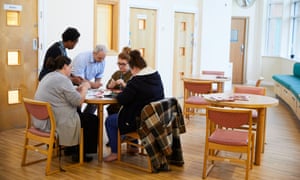
Staff helping a service user (right) during a crafts session at Guild Lodge.


Staff helping a service user (right) during a crafts session at Guild Lodge. Photograph: Christopher Thomond for the Guardian

From the outside, the pale bricks and long windows of the medium-secure area of Guild Lodge could pass for a leisure centre. Even the high mesh fence that surrounds it could be for tennis courts or a five-a-side football pitch. The low-secure area that sprawls outside looks and feels like a business park. There is little to distinguish buildings containing administration offices and meeting rooms from the wards in which patients sleep.


Service users (the preferred term for patient) considered low-risk are free to wander through the adjacent woodland, around an Anglican church, a cemetery and even a cricket pitch. One service user, who told me he spends much of his days watching wildlife and listening to music on a wind-up radio, insisted that a relative of local hero Andrew Flintoff was the groundsman.


As with all hospitals, the aim is that patients will one day be discharged from Guild Lodge with their illnesses under control. It is recovery-focused rather than punitive, and although the Ministry of Justice retains a controlling interest in the onward progression of many patients (some will go back to prison), funding for medium-secure hospitals comes entirely from NHS England’s special commissioning budget.


The unique challenge is to balance care with custody; to maintain the public’s security while effectively treating patients’ illnesses. For thousands of people like Gavin, who is genial, articulate and rational when his schizophrenia is under control, secure care units can prove the difference between what might be considered a worthwhile life, and one wasted as hostage to an unpredictable and often dangerous illness.


Such endeavours are not cheap. According to figures from NHS England, expenditure on medium- and high-secure mental health services during the past year was £1.23bn, which accounts for 74% of the special commissioning budget and is one fifth of all public spending on adult mental health care. Accurate figures on a patient-by-patient basis are difficult to obtain, but conservative estimates put the cost of a bed and care for a year in a medium-secure hospital at £150,000, nearly five times as much as a male inmate in a category B prison.


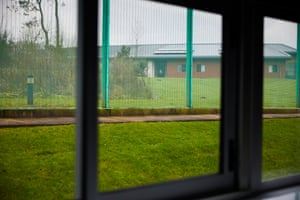
A view of one of the security fences at Guild Lodge NHS secure mental health unit in Lancashire. Christopher Thomond for The Guardian.


A view of one of the security fences at Guild Lodge. Photograph: Christopher Thomond for the Guardian

Partly because of their cost, forensic psychiatry hospitals are under almost constant review. Medium-secure services in particular have remained a focal point for mental health campaigners, who say patients are often too readily admitted to an unnecessarily high level of security and then stay too long. The most recent government taskforce report on mental health – titled Five Year Forward View for Mental Health, released in February – made fresh commitments to “prevent avoidable admissions”, support recovery in the “least restrictive setting” and “address existing fragmented pathways in secure care”. In essence, it emphasises a need to get patients hastily into secure care when mental illness is the root cause of their offending, but also to discharge them quickly and safely, with adequate continued care, to get on with their lives.


Yet there remain frequent claims that the Ministry of Justice is overly cautious in approving discharge from secure hospitals, and that there is inadequate onward housing provision for patients reintegrating into communities. In general, treatment for mental illness has progressed significantly since the days of the asylums, but age-old misconceptions persist about psychiatric institutions. Patients still suffer familiar prejudice on account of their illness, compounded by their detention in hospital.


“It’s very, very risk-averse stuff,” says Jenny Shaw, the recently retired clinical director for specialist services at Lancashire Care Foundation Trust, which oversees Guild Lodge. “Even having conversations with some of my friends, who should know better, [I hear] ‘How can you ever let people who have committed those kinds of offences out?’ It’s a complete lack of understanding of what we’re trying to do. I think there’s still a massive stigma around mental health, and people with mental health problems and who are offenders – it’s a massive double whammy.”


I visited Guild Lodge twice earlier this year, touring the medium-secure unit and talking to some service users about treatment programmes and the challenges they face. Journalists are rarely permitted inside secure care environments: service users are often vulnerable and their recovery programmes easily undermined by external distractions. Administrators are also wary of the sensationalist reporting mental health hospitals have been known to attract, while victims and their families stand to gain little by repeated exposure to the perpetrators of the crimes against them. All names have therefore been changed and details of offences omitted.


Staff in the woodwork room at Tarnbrook unit at Guild Lodge NHS secure mental health unit in Lancashire.


Staff in the woodwork room at Guild Lodge. Photograph: Christopher Thomond for the Guardian

In general, people who have committed offences as a result of a mental illness tend to be blighted by extreme guilt for their actions. Many people hear voices or suffer delusions that have encouraged their offences. Hospitals house people suffering from a vast range of illnesses – schizophrenia, psychosis, acute depression, bipolar disorder – from hugely varying backgrounds, many of whom have suffered extreme trauma. The propensity to self-harm is also high.


The area “over the fence” – as one service user described the medium-secure part of the hospital – has the atmosphere of a vocational college, albeit one in which most doors are permanently locked. Staff and visitors pass through an air-lock security door, past a small office where patients can meet guests, and then into a courtyard, with various separate buildings situated either side of an access road and areas of green lawns. After appropriate risk assessment, service users are allowed access to an art room and wood and metal-working workshops, or to learn gardening skills in an on-site greenhouse and nursery. There is also a music room, and a service-user band regularly plays gigs both in and outside the hospital.


My visit to the medium-secure unit coincided with lunch, when the common areas were almost entirely deserted. Patients were in gender-specific wards, where they sleep in single-occupancy rooms, with washing facilities, and are locked in overnight. Although neither staff nor service users denied that tempers can flare, and that patients’ moods and illnesses can often raise tensions inside the hospital, I saw no threatening behaviour. Patients at different stages of recovery demand varying levels of supervision, but I met service users for interview in the low-secure area to which they brought themselves and left unescorted.


Many patients in secure care have co-morbidity issues – drug or alcohol misuse, or personality disorders – and programmes work to tackle these, as well as to improve patients’ physical health. Smoking is entirely prohibited inside Guild Lodge, and service users are encouraged to use an on-site gym and sports hall. Weight gain remains one of the most damaging side-effects of many psychotropic medications, leading both to physical ailments and reduced self-esteem.


The horticulture polytunnel at Guild Lodge NHS secure mental health unit in Lancashire


The horticulture polytunnel at Guild Lodge. Photograph: Christopher Thomond for the Guardian

Guild Lodge is also relatively unusual in that its administrators have won a battle to permit computer use for service users. Access to technology brings out the most risk-averse tendencies of lawmakers, who fear that vulnerable patients may be drawn to the darkest fringes of the internet. (Mobile phones are also strictly forbidden.) But a lack of even rudimentary IT skills may be damaging to a patient’s prospects of reintegrating to the job market on release. Service users can suffer an extreme sense of isolation, as though they are separate from the community in which they hope to reintegrate. Any further barriers, such as a lack of basic skills, only compound anxiety issues surrounding discharge.


One low-secure service user named Janet, who was not at Guild Lodge and who met me in a coffee shop in London, described a scenario where she was required to go online to arrange her own onward housing in order to be discharged from a hospital, but was not permitted access to the internet before she left.


“In the five years I’ve been in hospital, the world has moved a lot,” Janet says. “One of the people I live with has been in hospital for 16 years. She is about to be discharged and she has got no concept of how to use the internet. None at all.”


She adds: “No matter how confident you are as an individual, your confidence just plummets. Even the most arrogant individuals in hospital – it’s quite interesting watching them go out into the community, all that arrogance and bravado seems to quite quickly crumble. It’s fearful. We have a bridge at the front of the hospital. It’s called ‘life beyond the bridge’. Patients fear crossing that bridge.”


In recent years, studies into the effectiveness of treatments for mental illness, including schizophrenia, have centred on involving patients themselves in planning their own recovery. Research has shown that patients respond better to treatment when they are engaged in it and given more control over the direction of their own care.


In the secure environment, attempts to empower patients in this way can be seen to run counter to the demands of security, but initiatives are now in place that focus on service-user involvement and are aimed at hastening recovery and expediting discharge. “These things are related,” says Ian Callaghan, a former service user, with experience of both low- and medium-secure hospitals, who now works for Rethink Mental Illness. “As soon as a person’s mental health is stabilised, things should change. Stabilising mental health and managing risk go hand-in-hand.”


Callaghan is the national service user lead for a Department of Health initiative named My Shared Pathway – a programme followed throughout a patient’s stay in hospital. My Shared Pathway is tailored to an individual’s specific needs and defines closely their shared relationships with the clinicians, support workers, other service users and eventually the community they hope to return to. Meanwhile, a scheme launched by Rethink Mental Illness’ Innovation Network is aiming to involve service users in planning their futures in a far more detailed way than has been the norm.


These initiatives aren’t to everyone’s taste. One 57-year-old service user, who had spent many years in Ashworth high-secure hospital before transferring to Guild Lodge seven years ago, said: “They have meetings about when to organise meetings.” The same service user was also not a supporter of the smoking prohibition, and said fellow patients squirrelled cigarettes just outside the fence.


A crafts session at Guild Lodge NHS secure mental health unit in Lancashire.


A crafts session at Guild Lodge. Photograph: Christopher Thomond for the Guardian

Nevertheless, initial feedback from staff and patients has mainly been good, and further trials are also currently under way to enhance the role of peer-support workers in secure hospitals. The idea is that experienced service users can volunteer their support and advice to other patients, building on informal relationships on some wards and broadening networks of trusted individuals. Service users are known to respond well to people who have been through the secure-care system and have successfully returned to the community. Janet says: “It does sometimes take somebody who has recovered to let you see the light a little bit.”


Service users and staff both told me that it can be detrimental to recovery if, after being cleared for discharge by a clinician, a patient is denied release either by the Ministry of Justice, or by a lack of onward accommodation provision. After the taskforce recommendations, NHS England is trialling a reorganisation of budgets to allow local administrators to manage pathways out of hospital and into community mental health care teams. The aim is that medium-secure services be used only to address the most pressing clinical needs, rather than by patients for whom there is simply nowhere else to go.


Gavin says that the severity of his illness did not allow him to understand the benefit of his treatment during previous admissions to secure hospital. He returned to the prison system and stopped taking medication, leading to a deterioration in his condition. (Prisoners can reject medication, but some sections of the Mental Health Act, under which service users will be in hospital, allow for doctors to administer it without consent.) Eventually, after returning again to secure care, a course of therapy helped him manage his illness and turn over a new leaf.


“You get to a certain point where [you think], ‘What’s been going on? What have I been doing with my life?’” he says. “I just want to leave now. I don’t smoke anymore, I’ve not done drugs, I’ve not drunk alcohol and I don’t intend to. I don’t want to go back to that life.”


Better than prison: life inside the UK"s secure hospitals

My Black Farmer Christmas Day TV ad will shine a light on small charities

When I decided to fund a TV commercial on Christmas Day, I didn’t realise it would lead to the start of a campaign to ask large businesses to change their approach to charitable giving and support small charities.


Here’s how that came about.


After I was diagnosed with acute myeloid leukaemia, which left me in need of a gruelling stem cell transplant, I spent the best part of 2014 in hospital. While there I benefitted from the amazing work that charities do, so when I left hospital I wanted to give something back.


I not only wanted to give the gift of funding but of awareness. I settled on a Christmas Day TV advert to highlight the work of a specific charity, as well as advertising on product packs. But when I approached some of the UK’s leading charities, I was shocked to be made to feel as if I had to prove myself and my brand to earn their approbation. Sadly I was too small for them, and they were too big to care.


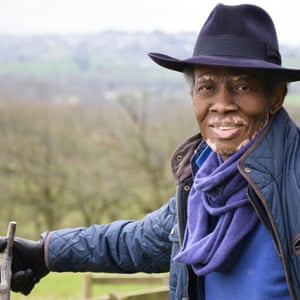
the Black Farmer, Wilfred Emmanuel-Jones


Wilfred Emmanuel-Jones. Photograph: The Black Farmer

The experience made me look beyond these big, well-known charities to the smaller ones doing extraordinary work on a shoestring. They are overlooked when it comes to big corporate giving but their work is just as important, if not more so. I vowed then and there to do something to help.


I have written and directed a two-minute TV commercial (with no mention of the products I sell) and have secured a prime time spot on Channel 4 on Christmas Day, timed to air just after the Queen’s Christmas broadcast. This is the advert I wantto use to shine a light on these small-time heroes.


I approached a small, Tetbury-based national charity called Hope For Tomorrow, which works tirelessly to provide mobile chemotherapy units to local NHS Trusts so patients don’t have to travel for hours for treatment. The charity leapt at the chance to work with me because such opportunities to raise awareness of their work don’t come their way often, and I was thrilled to be involved with such a great cause.


But I was shocked by the huge gap between big and small organisations in the charity sector. The larger charities get the lion’s share of corporate giving, leaving the smaller ones scrabbling for scraps.


This is a flaw in the charity sector, and much of the problem comes from an unbalanced relationship with business. Large organisations mainly work with large charities that already have a global level of awareness. It’s almost as though businesses are glory hunting when it comes to charity partnerships, to the detriment of smaller charities.


I have launched a campaign calling for large corporations to support small charities and shout about the ones they are already supporting. So whatever your cause, please sign my pledge and help to make a change this Christmas.


I have also dedicated a page on my Black Farmer website to help businesses and small charities find each other. As businesses, it’s important to show that we care for bigger things than just the products we sell.


Talk to us on Twitter via @Gdnvoluntary and join our community for your free Guardian Voluntary Sector monthly newsletter, with analysis and opinion sent direct to you on the first Thursday of the month.


My Black Farmer Christmas Day TV ad will shine a light on small charities

4 Celebrities Doing Their Part to Save the Environment

Not all celebrities are self absorbed. Here are four celebrities doing their part to save the environment, and it’s time we follow suit.


  • Leonardo DiCaprio

Leo is well known for his efforts to save the environment. DiCaprio understands that his popularity and that of other celebrities can be used as a platform to help bring awareness and change to climate change. Climate change will not just affect an unlucky few, it will affect us all. Leo gets it. And he is doing everything he can to try and bring about solutions that will address climate change.


  • Erin Brockovich

Maybe she isn’t a movie star, but they did make a movie about her. Brockovich’s help in uncovering PG&E’s pollution and cover up led to the largest settlement of its kind. The people of Hinkley, Ca were awarded $ 333 million. Brockovich uncovered the illegal dumping of unfiltered contamination into local groundwater. According to Filtra Systems, “Industrial water filtration opportunities present a considerable opportunity for the machining, mining, semiconductor, and other industries to improve the quality of their water while preserving the water in the environment”. PG&E would be $ 333 million richer if it had invested more in safety.


  • Jack Johnson

Jack Johnson is a surfer that lives in Hawaii and has a special opportunity to see the effect of climate change. He uses his celebrity status to help bring awareness to environmental issues. Jack Johnson promoted Green Touring in 2014 as a way for artists to reduce their environmental impact on tour. Jack and his wife, Kim, founded the Johnson Ohana Charitable Foundation in 2008. The foundation helps support communities by promoting education in art, music and the environment.


  • Daryl Hanna

Not all celebrities are willing to put themselves on the front line when it comes to protecting the planet. Daryl Hanna does not just talk the talk but walks the walk. Risking jail time in order to help the cause. Hanna has been arrested more than once in her efforts to save the environment. She was arrested while protesting the Keystone XL Pipeline construction, physically placing herself in front of construction equipment. Hanna was arrested twice protesting outside of White House against the pipeline development. Before those arrests, she had previously been arrested in 2009 and 2006. In 2009 she was part of a protest to stop mountaintop removal for surface mining. In 2006 she was involved in protesting against the bulldozing of an urban garden in south central Los Angeles. Her efforts in protecting the environment have been heroic, to say the least.


References:


Filtra Systems


4 Celebrities Doing Their Part to Save the Environment